“It appears to me that at a very early age—the mind of man—perhaps at the same time with his body, ceases to be elastic. His intellectual power becomes something defined —& limited. He does not think as expansively as he would stretch himself in his growing days—What was flexible sap hardens into heartwood and there is no further change. In the season of youth methinks man is capable of intellectual effort 8c performance which surpasses all rules 8c bounds—As the youth lays out his whole strength without fear or prudence 8c does not feel his limits. It is the transition from poetry to prose. The young man can run 8c leap—he has not learned exactly how far—he knows no limits—The grown man does not exceed his daily labor. He has no strength to waste. 17 January 1852, Journal 4: 265-66
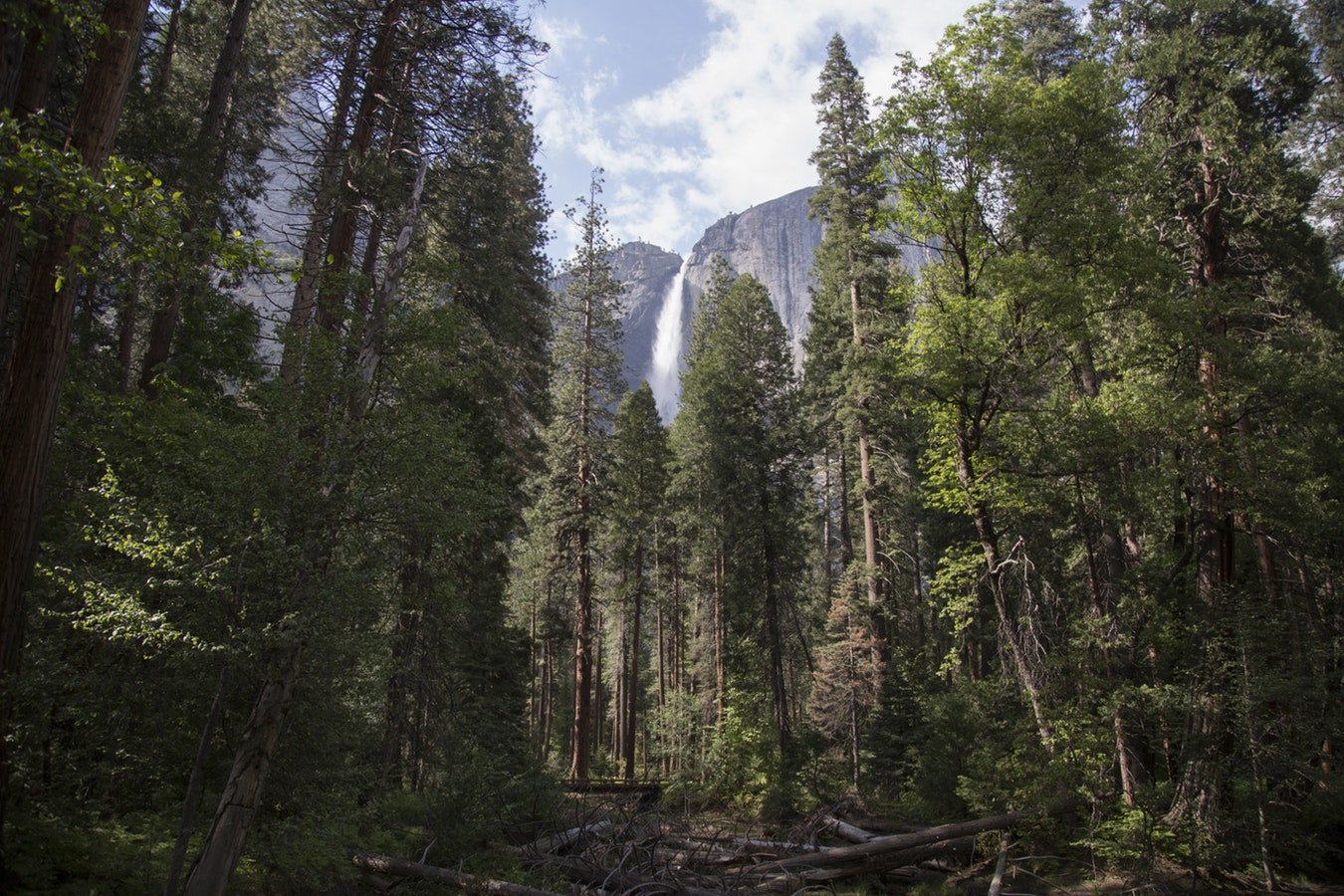
What are the natural features which make a township handsome? A river, with its waterfalls and meadows, a lake, a hill, a cliff or individual rocks, a forest, and ancient trees standing singly. Such things are beautiful; they have a high use which dollars and cents never represent. If the inhabitants of a town were wise, they would seek to preserve these things, though at a considerable expense; for such things educate far more than any hired teachers or preachers, or any at present recognized system of school education.
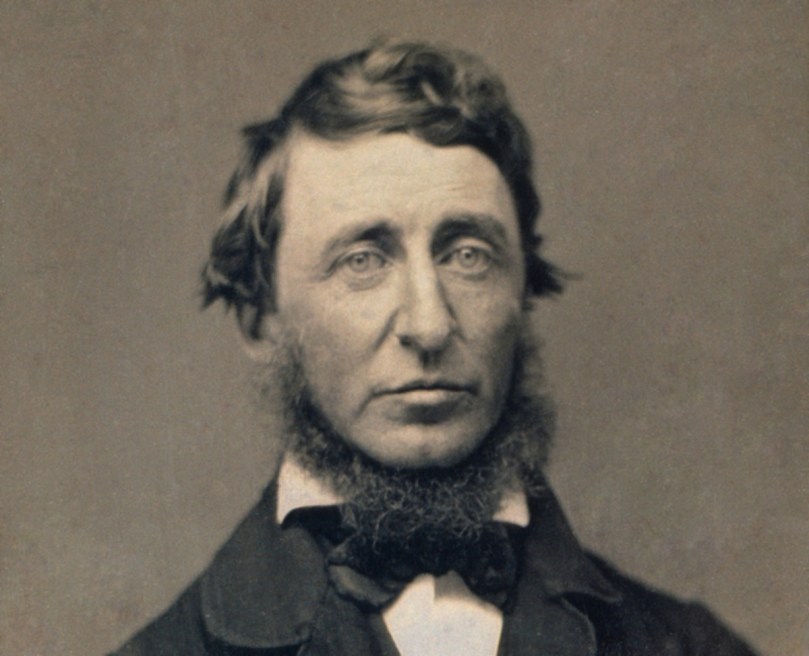
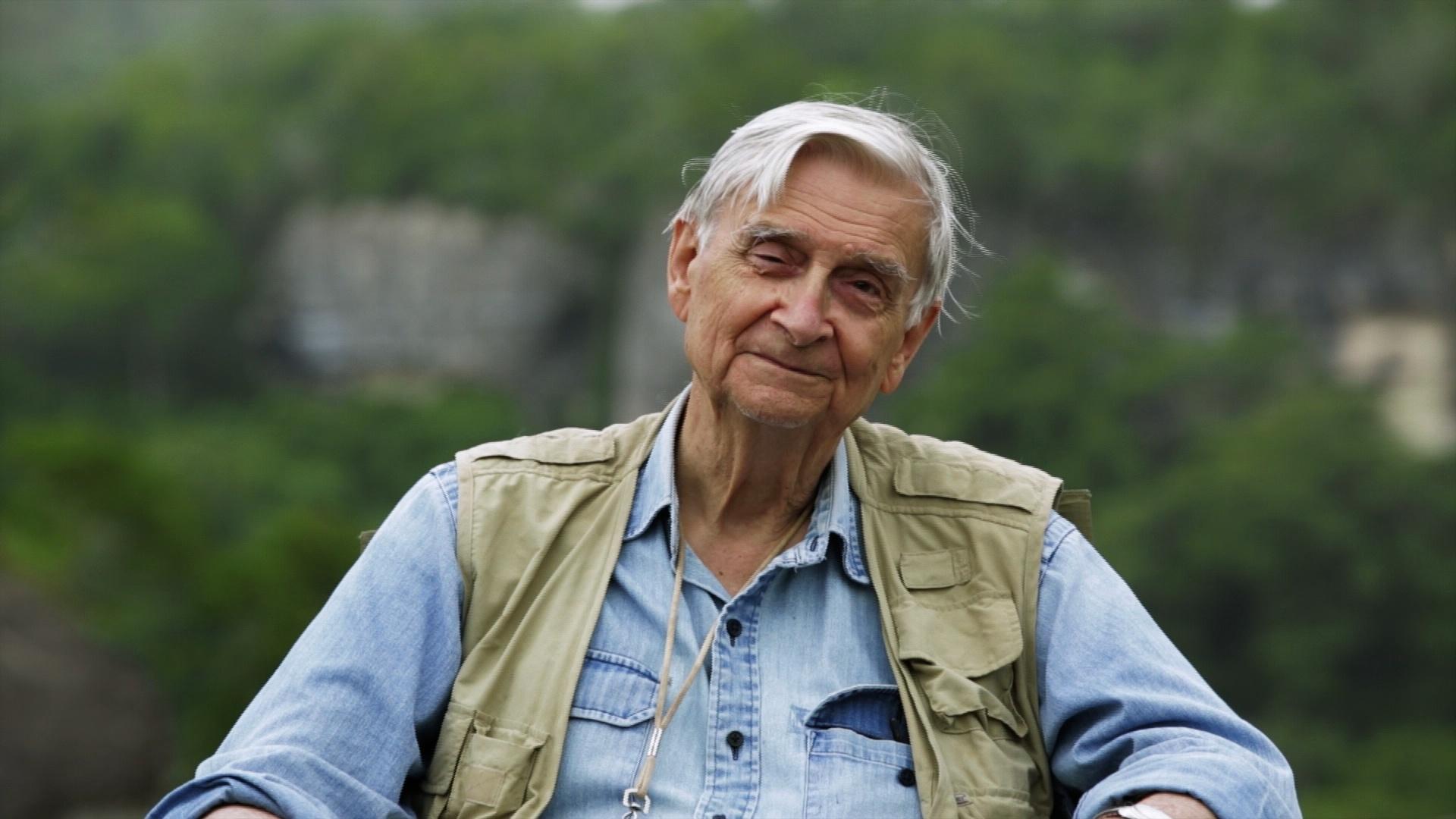
“Henry David Thoreau . . . was thought by many in his own time to be an eccentric who escaped from the mainstream of real life in order to dream. He was the opposite of that. He understood intuitively what we now know in more concrete and objective terms, that humanity is a biological species and thus exquisitely adapted to the natural world that cradled us. Thoreau was the scientific observer and lyrical expositor who hit upon the power of this conjunction between science and the humanities. He was the first great nature writer, whose knowledge of the living world, based on experience, was refined and projected as poetry. Nature writing, one of the major innovations of American literature, also includes in its pantheon John Muir, Aldo Leopold, and Rachel Carson. Together these writers say to us that humanity coevolved with the rest of life on this particular planet; other worlds are not in our genes. It is a delusion that people can flourish apart from the living world. We might do so physically, like animals in a feed lot, but not spiritually, not to the full extent for which our brains are designed.
People travel into nature in search of new life and wonder, and from nature they return to the parts of the earth that have been humanized and made physically secure. Nature, and especially that part saved as wilderness, settles peace on the soul because it needs no help; it is beyond human contrivance. It is also a metaphor of unlimited opportunity, rising from the tribal memory of a time in which humanity spread across the world, valley to valley, island to island, godstruck, firm in the belief that virgin land went on forever beyond the horizon. That is very much an American dream, and one we will be wise to keep alive by the preservation of our wild heritage.
Near the island I saw a muskrat close by swimming in an open reach. He was always headed up-stream, a great proportion of the head out of water, and his whole length visible, though the root of the tail is about level with the water. Now and then he [stopped] swimming and floated down-stream, still keeping his head pointed up with his tail. It is surprising how dry he looks, as if that back was never immersed in the water.
My first true winter walk is perhaps that which I take on the river, or where I cannot go in the summer. It is the walk peculiar to winter, and now first I take it. I see that the fox too has already taken the same walk before me, just along the edge of the button-bushes, where not even he can go in the summer. We both turn our steps hither at the same time.
There is now, at 2:30 P. M., the melon-rind arrangement of the clouds. Really parallel columns of fine mackerel sky, reaching quite across the heavens from west to east, with clear intervals of blue sky, and a fine-grained vapor like spun glass extending in the same direction beneath the former. In half an hour all this mackerel sky is gone.
What an ever-changing scene is the sky with its drifting cirrhus and stratus! The spectators are not requested to take a recess of fifteen minutes while the scene changes, but, walking commonly with our faces to the earth, our thoughts revert to other objects, and as often as we look up the scene has changed. Now, I see, it is a column of white vapor reaching quite across the sky, from west to east, with locks of fine hair, or tow that is carded, combed out on each side, – surprising touches here and there, which show a peculiar state of the atmosphere. No doubt the best weather-signs are in these forms which the vapor takes. When I next look up, the locks of hair are perfect fir trees with their recurved branches. (These trees extend at right angles from the side of the main column.) This appearance is changed all over the sky in one minute. Again it is pieces of asbestos, or the vapor takes the curved form of the surf or breakers, and again of flames.
But how long can a man be in a mood to watch the heavens? That melon-rind arrangement, so very common, is perhaps a confirmation of Wise the balloonist’s statement that at a certain height there is a current of air moving from west to east. Hence we so commonly see the clouds arranged in parallel columns in that direction.
Though winter is represented in the almanac as an old man, facing the wind and sleet, and drawing his cloak about him, we rather think of him as a merry woodchopper, and warm-blooded youth, as blithe as summer. The unexplored grandeur of the storm keeps up the spirits of the traveler. It does not trifle with us, but has a sweet earnestness. In winter we lead a more inward life. Our hearts are warm and cheery, like cottages under drifts, whose windows and doors are half concealed, but from whose chimneys the smoke cheerfully ascends. The imprisoning drifts increase the sense of comfort which the house affords, and in the coldest days we are content to sit over the hearth and see the sky through the chimney-top, enjoying the quiet and serene life that may be had in a warm corner by the chimney-side, or feeling our pulse by listening to the low of cattle in the street, or the sound of the flail in distant barns all the long afternoon. No doubt a skillful physician could determine our health by observing how these simple and natural sounds affected us. We enjoy now, not an Oriental, but a Boreal leisure, around warm stoves and fireplaces, and watch the shadow of motes in the sunbeams. — Thoreau
“I am grateful for what I am and have. My thanksgiving is perpetual. It is surprising how contented one can be with nothing definite – only a sense of existence. Well, anything for variety. I am ready to try this for the next ten thousand years, and exhaust it. How sweet to think of! my extremities well charred, and my intellectual part too, so that there is no danger of worm or rot for a long while. My breath is sweet to me. O how I laugh when I think of my vague indefinite riches. No run on my bank can drain it, for my wealth is not possession but enjoyment.” –Henry David Thoreau in a letter to Harrison Blake (December 6, 1853)
I have been going about the valley all morning day, anxious to learn what I could of this magnificent power. The ground is still in motion. It has never fairy settled since the first shock. Between each of the greater shocks a heavy rumbling is heard, not always dis- tinguishable from the explosive notes of the Upper Fall. These are the first spoken words that I have heard direct from the tender bosom of Mother Earth. Frogs cease their songs when a severe shock occurs. I noticed a pair of robins flying with a frightened cheep cheep from a shaken oak. Butterflies seem to know nothing about it. Vertical animals are mostly in sore consternation. Two or three have fled. A little girl of Hutchings cried terror stricken in the night, Grandma Grandma Pray to God to stop it. I met? two violets up by Indian Canon I asked them while I looked in their eyes, what they thought of the great quake storm. They replied It’s all Love . We have lost Eagle Rock but have gained another that is more beautiful, Distruction is always creation; storms of water cloud, Storms of azure wind, purple granite, are things of Beauty Love, working Beauty Love constantly higher yet higher – I did not purpose sending so much storm. I write mostly to repeat my invitation to Yosemite next summer. for this year Pacific letters fly Atlanticward like wounded birds, All are unsteady many fall dead in drifts.
Our thoughts and love are with our friends, family and all the people of California.




 Dean’s List