Category: Thoreau-Back Thursday
E. O. Wilson on Thoreau
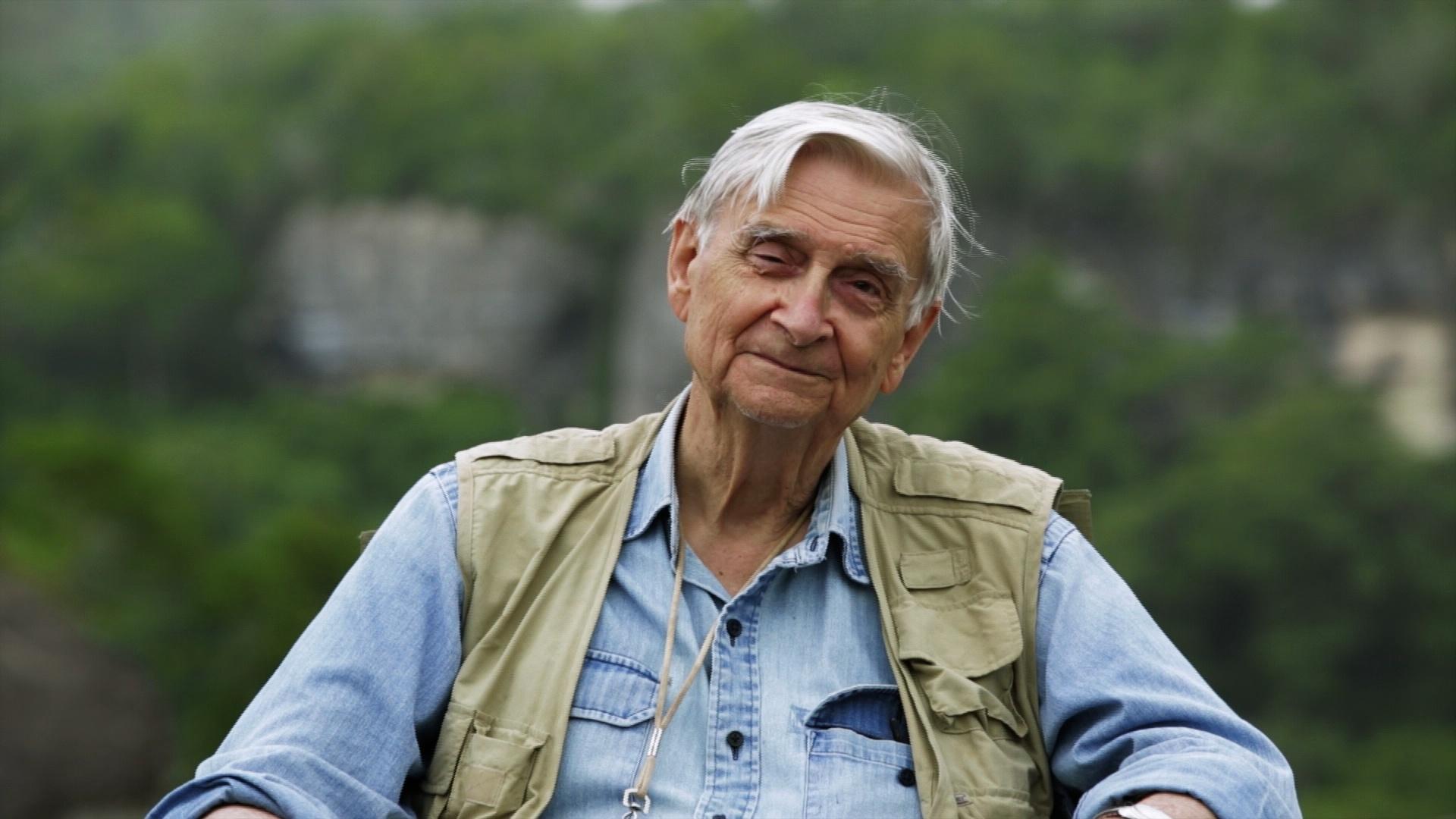
“Henry David Thoreau . . . was thought by many in his own time to be an eccentric who escaped from the mainstream of real life in order to dream. He was the opposite of that. He understood intuitively what we now know in more concrete and objective terms, that humanity is a biological species and thus exquisitely adapted to the natural world that cradled us. Thoreau was the scientific observer and lyrical expositor who hit upon the power of this conjunction between science and the humanities. He was the first great nature writer, whose knowledge of the living world, based on experience, was refined and projected as poetry. Nature writing, one of the major innovations of American literature, also includes in its pantheon John Muir, Aldo Leopold, and Rachel Carson. Together these writers say to us that humanity coevolved with the rest of life on this particular planet; other worlds are not in our genes. It is a delusion that people can flourish apart from the living world. We might do so physically, like animals in a feed lot, but not spiritually, not to the full extent for which our brains are designed.
People travel into nature in search of new life and wonder, and from nature they return to the parts of the earth that have been humanized and made physically secure. Nature, and especially that part saved as wilderness, settles peace on the soul because it needs no help; it is beyond human contrivance. It is also a metaphor of unlimited opportunity, rising from the tribal memory of a time in which humanity spread across the world, valley to valley, island to island, godstruck, firm in the belief that virgin land went on forever beyond the horizon. That is very much an American dream, and one we will be wise to keep alive by the preservation of our wild heritage.
Excerpt From “Material Faith.” 1999
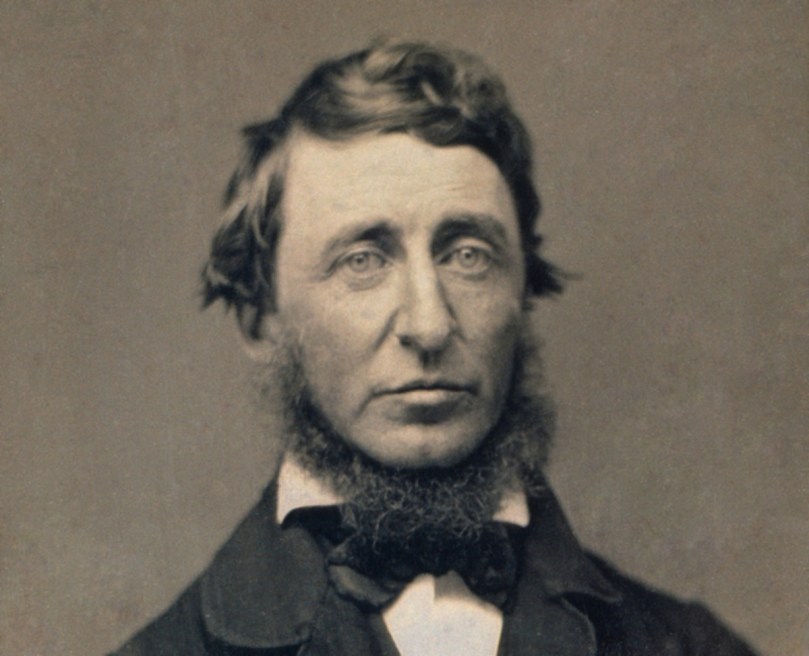
Thoreau’s Journal December 19th, 1854

Near the island I saw a muskrat close by swimming in an open reach. He was always headed up-stream, a great proportion of the head out of water, and his whole length visible, though the root of the tail is about level with the water. Now and then he [stopped] swimming and floated down-stream, still keeping his head pointed up with his tail. It is surprising how dry he looks, as if that back was never immersed in the water.
Thoreau’s Journal –December 13, 1859
P. M. – On river to Fair Haven Pond.
My first true winter walk is perhaps that which I take on the river, or where I cannot go in the summer. It is the walk peculiar to winter, and now first I take it. I see that the fox too has already taken the same walk before me, just along the edge of the button-bushes, where not even he can go in the summer. We both turn our steps hither at the same time.
There is now, at 2:30 P. M., the melon-rind arrangement of the clouds. Really parallel columns of fine mackerel sky, reaching quite across the heavens from west to east, with clear intervals of blue sky, and a fine-grained vapor like spun glass extending in the same direction beneath the former. In half an hour all this mackerel sky is gone.
What an ever-changing scene is the sky with its drifting cirrhus and stratus! The spectators are not requested to take a recess of fifteen minutes while the scene changes, but, walking commonly with our faces to the earth, our thoughts revert to other objects, and as often as we look up the scene has changed. Now, I see, it is a column of white vapor reaching quite across the sky, from west to east, with locks of fine hair, or tow that is carded, combed out on each side, – surprising touches here and there, which show a peculiar state of the atmosphere. No doubt the best weather-signs are in these forms which the vapor takes. When I next look up, the locks of hair are perfect fir trees with their recurved branches. (These trees extend at right angles from the side of the main column.) This appearance is changed all over the sky in one minute. Again it is pieces of asbestos, or the vapor takes the curved form of the surf or breakers, and again of flames.
But how long can a man be in a mood to watch the heavens? That melon-rind arrangement, so very common, is perhaps a confirmation of Wise the balloonist’s statement that at a certain height there is a current of air moving from west to east. Hence we so commonly see the clouds arranged in parallel columns in that direction.
A Winter Walk
Though winter is represented in the almanac as an old man, facing the wind and sleet, and drawing his cloak about him, we rather think of him as a merry woodchopper, and warm-blooded youth, as blithe as summer. The unexplored grandeur of the storm keeps up the spirits of the traveler. It does not trifle with us, but has a sweet earnestness. In winter we lead a more inward life. Our hearts are warm and cheery, like cottages under drifts, whose windows and doors are half concealed, but from whose chimneys the smoke cheerfully ascends. The imprisoning drifts increase the sense of comfort which the house affords, and in the coldest days we are content to sit over the hearth and see the sky through the chimney-top, enjoying the quiet and serene life that may be had in a warm corner by the chimney-side, or feeling our pulse by listening to the low of cattle in the street, or the sound of the flail in distant barns all the long afternoon. No doubt a skillful physician could determine our health by observing how these simple and natural sounds affected us. We enjoy now, not an Oriental, but a Boreal leisure, around warm stoves and fireplaces, and watch the shadow of motes in the sunbeams. — Thoreau
Thanksgiving

“I am grateful for what I am and have. My thanksgiving is perpetual. It is surprising how contented one can be with nothing definite – only a sense of existence. Well, anything for variety. I am ready to try this for the next ten thousand years, and exhaust it. How sweet to think of! my extremities well charred, and my intellectual part too, so that there is no danger of worm or rot for a long while. My breath is sweet to me. O how I laugh when I think of my vague indefinite riches. No run on my bank can drain it, for my wealth is not possession but enjoyment.”
–Henry David Thoreau in a letter to Harrison Blake (December 6, 1853)
From Muir’s Letter to Emerson 03.26.1872
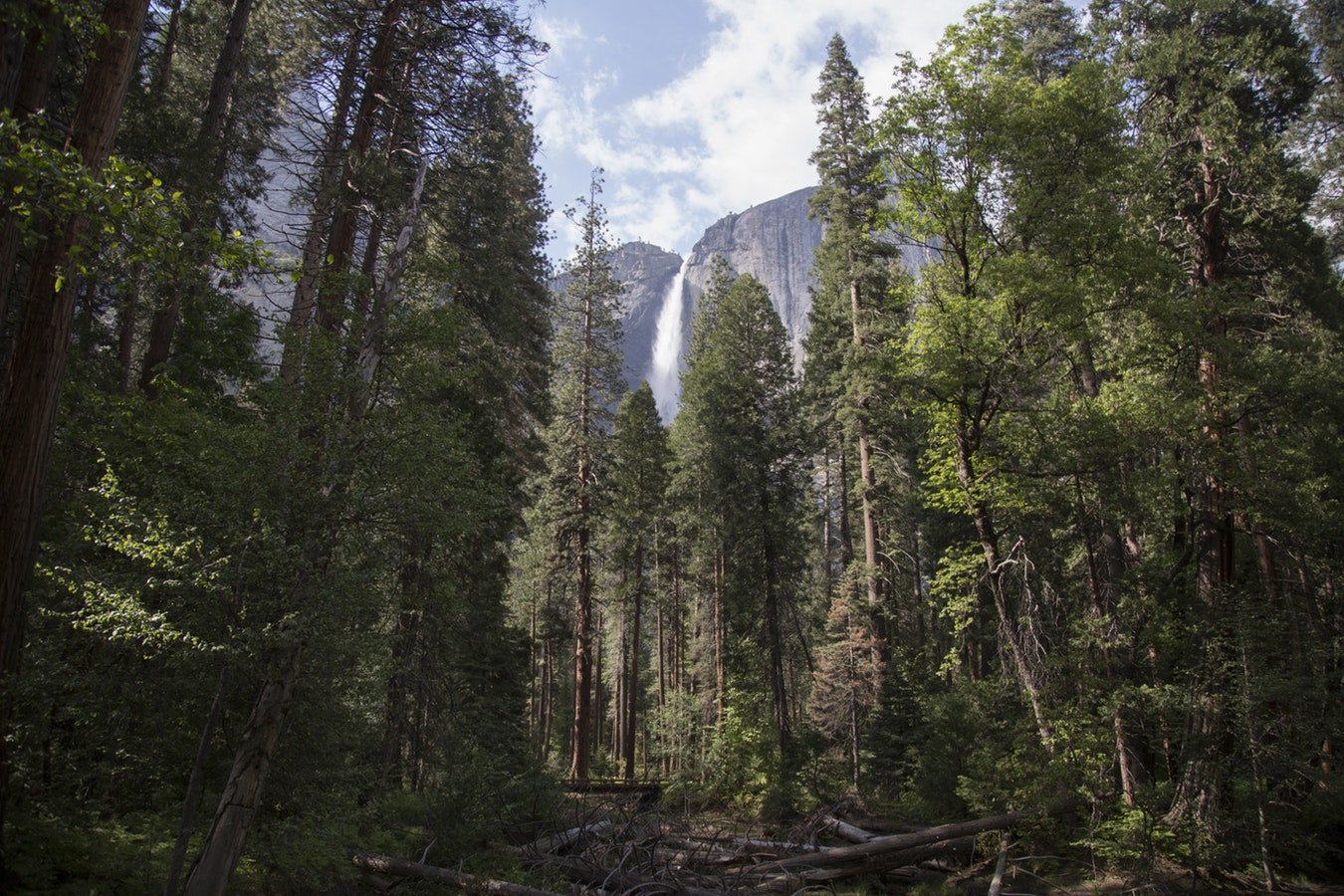
I have been going about the valley all morning day, anxious to learn what I could of this magnificent power. The ground is still in motion. It has never fairy settled since the first shock. Between each of the greater shocks a heavy rumbling is heard, not always dis- tinguishable from the explosive notes of the Upper Fall. These are the first spoken words that I have heard direct from the tender bosom of Mother Earth. Frogs cease their songs when a severe shock occurs. I noticed a pair of robins flying with a frightened cheep cheep from a shaken oak. Butterflies seem to know nothing about it. Vertical animals are mostly in sore consternation. Two or three have fled. A little girl of Hutchings cried terror stricken in the night, Grandma Grandma Pray to God to stop it. I met? two violets up by Indian Canon I asked them while I looked in their eyes, what they thought of the great quake storm. They replied It’s all Love . We have lost Eagle Rock but have gained another that is more beautiful, Distruction is always creation; storms of water cloud, Storms of azure wind, purple granite, are things of Beauty Love, working Beauty Love constantly higher yet higher – I did not purpose sending so much storm. I write mostly to repeat my invitation to Yosemite next summer. for this year Pacific letters fly Atlanticward like wounded birds, All are unsteady many fall dead in drifts.
Our thoughts and love are with our friends, family and all the people of California.
Margaret Fuller On Falsehoods

It is astonishing what force, purity, and wisdom it requires for a human being to keep clear of falsehoods.
— Margaret Fuller
Ralph Waldo Emerson, Nature
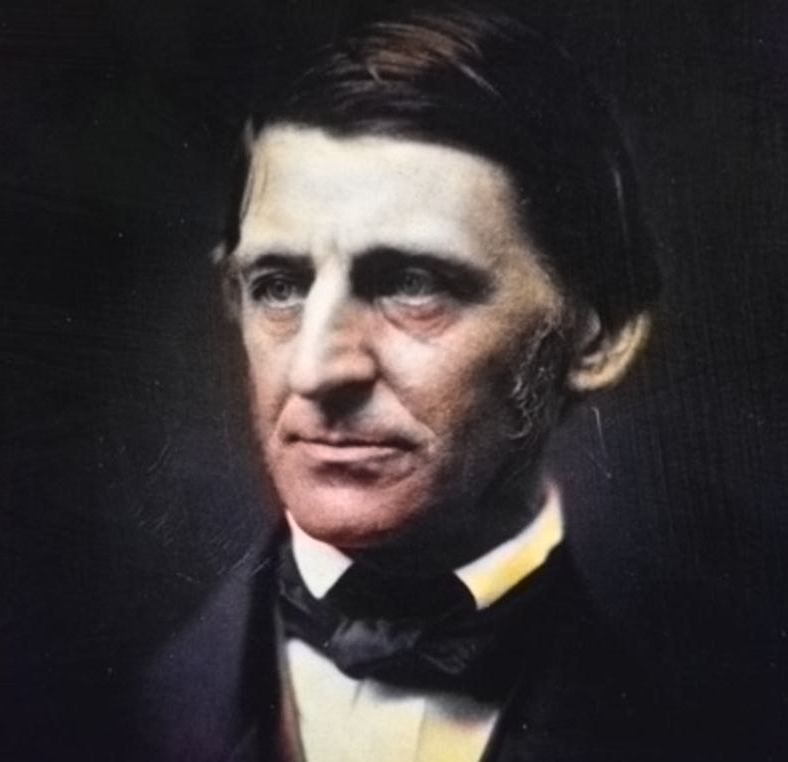
Every spirit builds itself a house; and beyond its house a world; and beyond its world, a heaven. Know then, that the world exists for you. For you is the phenomenon perfect. What we are, that only can we see. All that Adam had, all that Caesar could, you have and can do. Adam called his house, heaven and earth; Caesar called his house, Rome; you perhaps call yours, a cobler’s trade; a hundred acres of ploughed land; or a scholar’s garret. Yet line for line and point for point, your dominion is as great as theirs, though without fine names. Build, therefore, your own world.
― Nature
Walking (Final Part)
We hug the earth—how rarely we mount! Methinks we might elevate ourselves a little more. We might climb a tree, at least. I found my account in climbing a tree once. It was a tall white pine, on the top of a hill; and though I got well pitched, I was well paid for it, for I discovered new mountains in the horizon which I had never seen before—so much more of the earth and the heavens. I might have walked about the foot of the tree for threescore years and ten, and yet I certainly should never have seen them. But, above all, I discovered around me—it was near the end of June—on the ends of the topmost branches only, a few minute and delicate red conelike blossoms, the fertile flower of the white pine looking heavenward. I carried straightway to the village the topmost spire, and showed it to stranger jury- men who walked the streets—for it was court week—and to farmers and lumber-dealers and woodchoppers and hunters, and not one had ever seen the like before, but they wondered as at a star dropped down. Tell of ancient architects finishing their works on the tops of columns as perfectly as on the lower and more visible parts! Nature has from the first expanded the minute blossoms of the forest only toward the heavens, above men’s heads and unobserved by them. We see only the flowers that are under our feet in the meadows. The pines have developed their delicate blossoms on the highest twigs of the wood every summer for ages, as well over the heads of Nature’s red children as of her white ones; yet scarcely a farmer or hunter in the land has ever seen them.
Above all, we cannot afford not to live in the present. He is blessed over all mortals who loses no moment of the passing life in remembering the past. Unless our philosophy hears the cock crow in every barnyard within our horizon, it is belated. That sound commonly reminds us that we are growing rusty and antique in our employments and habits of thoughts. His philosophy comes down to a more recent time than ours. There is something suggested by it that is a newer testament—the gospel according to this moment. He has not fallen astern; he has got up early and kept up early, and to be where he is is to be in season, in the foremost rank of time. It is an expression of the health and soundness of Nature, a brag for all the world—healthiness as of a spring burst forth, a new fountain of the Muses, to celebrate this last instant of time. Where he lives no fugitive slave laws are passed. Who has not betrayed his master many times since last he heard that note?
The merit of this bird’s strain is in its freedom from all plaintiveness. The singer can easily move us to tears or to laughter, but where is he who can excite in us a pure morning joy? When, in doleful dumps, breaking the awful stillness of our wooden sidewalk on a Sunday, or, perchance, a watcher in the house of mourning, I hear a cockerel crow far or near, I think to myself, “There is one of us well, at any rate,” and with a sudden gush return to my senses.
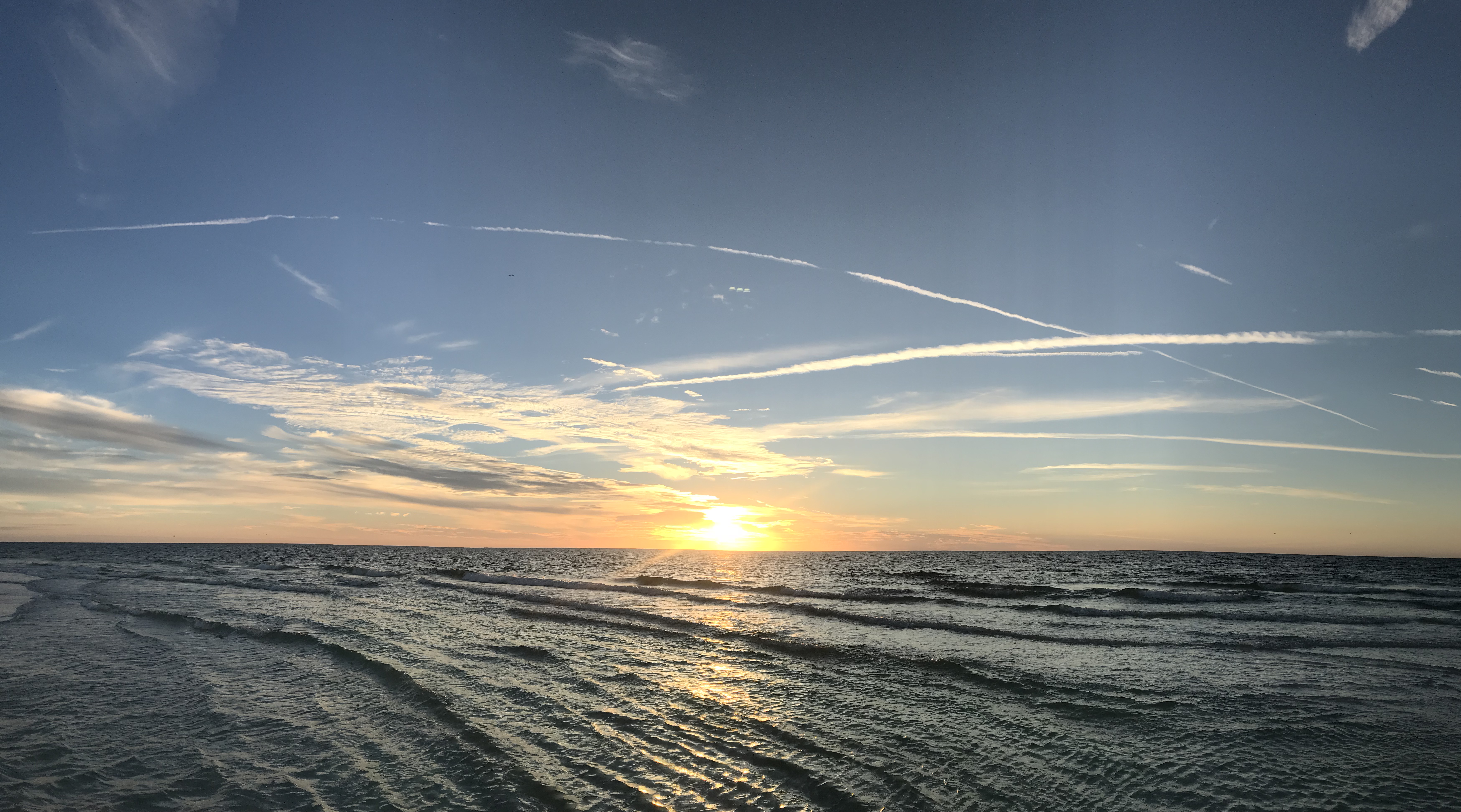
We had a remarkable sunset one day last November. I was walking in a meadow, the source of a small brook, when the sun at last, just before setting, after a cold, gray day, reached a clear stratum in the horizon, and the softest, brightest morning sunlight fell on the dry grass and on the stems of the trees in the opposite horizon and on the leaves of the shrub oaks on the hillside, while our shadows stretched long over the meadow east- ward, as if we were the only motes in its beams. It was such a light as we could not have imagined a moment before, and the air also was so warm and serene that nothing was wanting to make a paradise of that meadow. When we reflected that this was not a solitary phenomenon, never to happen again, but that it would happen forever and ever, an infinite number of evenings, and cheer and reassure the latest child that walked there, it was more glorious still.
The sun sets on some retired meadow, where no house is visible, with all the glory and splendor that it lavishes on cities, and perchance as it has never set before—where there is but a solitary marsh hawk to have his wings gilded by it, or only a musquash looks out from his cabin, and there is some little black-veined brook in the midst of the marsh, just beginning to meander, winding slowly round a decaying stump. We walked in so pure and bright a light, gilding the withered grass and leaves, so softly and serenely bright, I thought I had never bathed in such a golden flood, without a ripple or a murmur to it. The west side of every wood and rising ground gleamed like the boundary of Elysium, and the sun on our backs seemed like a gentle herdsman driving us home at evening.
So we saunter toward the Holy Land, till one day the sun shall shine more brightly than ever he has done, shall perchance shine into our minds and hearts, and light up our whole lives with a great awakening light, as warm and serene and golden as on a bankside in autumn.
 Dean’s List