New research contends that a surge in handgun production and possession propelled murder rates in American cites — until new restrictions on firearms reversed the trendlines.
Huh?
New research contends that a surge in handgun production and possession propelled murder rates in American cites — until new restrictions on firearms reversed the trendlines.
Huh?
In the midst of the Michael Cohen/Paul Manafort/Donald Trump news bonanza this week, some important news got buried. Okay, the Trump news isn’t unimportant, but we’re talking “important” in terms of the long-term survival of the human race in the face of climate change. And recent signs from the Arctic shows that those chances of surviving aren’t great. Here’s what’s going on
Hint: It’s not good!

There was a child went forth every day,
And the first object he look’d upon, that object he became,
And that object became part of him for the day or a certain part of the day, Or for many
years or stretching cycles of years.
The early lilacs became part of this child,
And grass and white and red morning glories, and white and red clover,
\and the song of the phoebe-bird,
And the Third-month lambs and the sow’s pink-faint litter,
and the mare’s foal and the cow’s calf, . . .
—WALT WHITMAN
I like to play indoors better ’cause that’s where all the electrical outlets are.
—A FOURTH-GRADER IN SAN DlEGO
Epigraph, Last Child In The Woods — Richard Louv

“The take-home message for municipalities is: Stop setting your bar at the level of the most anxious parent. If you do that, you’re guaranteed to produce boring and dull playgrounds,” said Tim Gill, a London-based researcher and advocate who recently authored a white paper on faulty assumptions about risky playgrounds. “If you set your bar at the level of the average parent or maybe even at the level of the parents … who do want some more excitement and challenge in their kids’ lives, then, things start to look different.”
Go Outside And Play!
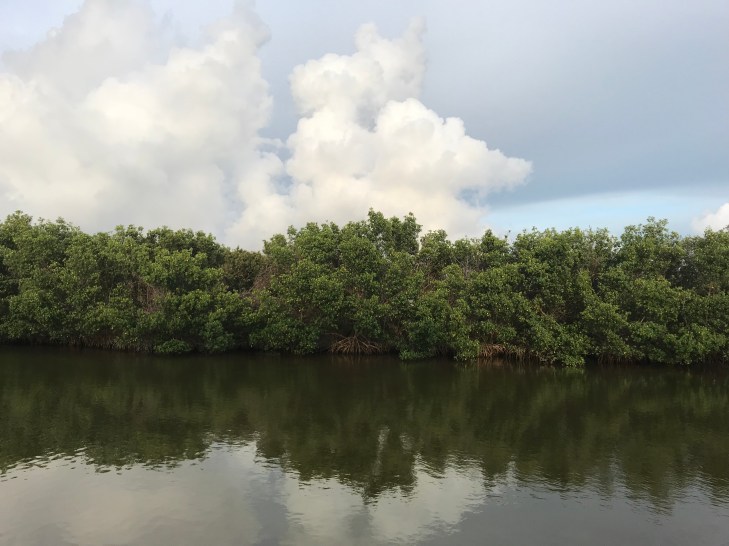
The 30th gathering of the San Francisco–based Forest Bathing Club occurred on a Sunday afternoon in the Presidio, the city’s gorgeous 1,500-acre military post turned national park. The group first convened in 2015 and has lately ramped up to four or five events each month.
I try to saunter in nature every day.
By 2013, a new sort of woman was using heroin: Affluent women. Middle aged, middle-class women with carpools. Gen X moms recovering from knee surgeries. College girls with double majors. Women with incomes above $50,000 and private health insurance. Women who had been taking Oxycodone and Vicodin because they’re excellent pain-relievers. Superior to a vodka tonic. Better than smoking a joint.
The CDC declared opioid abuse an epidemic in back in 2011. In October, President Trump declared the epidemic a health emergency. According to the CDC, heroin and opioid use among women doubled between 2004 and 2013—a rate twice that of men. More women are dying from prescription pain pills than ever before. Since 1999, the number of fatal overdoses among women has increased 400 percent, among men, 265.
Kinda puts that whole pot is addictive post in perspective.
Public-health experts worry about the increasingly potent options available, and the striking number of constant users. “Cannabis is potentially a real public-health problem,” said Mark A. R. Kleiman, a professor of public policy at New York University. “It wasn’t obvious to me 25 years ago, when 9 percent of self-reported cannabis users over the last month reported daily or near-daily use. I always was prepared to say, ‘No, it’s not a very abusable drug. Nine percent of anybody will do something stupid.’ But that number is now [something like] 40 percent.” They argue that state and local governments are setting up legal regimes without sufficient public-health protection, with some even warning that the country is replacing one form of reefer madness with another, careening from treating cannabis as if it were as dangerous as heroin to treating it as if it were as benign as kombucha.
But cannabis is not benign, even if it is relatively benign, compared with alcohol, opiates, and cigarettes, among other substances. Thousands of Americans are finding their own use problematic in a climate where pot products are getting more potent, more socially acceptable to use, and yet easier to come by, not that it was particularly hard before.
A lot of public policy yet to be worked out here. Lot’s of potential problems.
Wait, first of all, what do you mean “became cool?”
If you didn’t know that Birkenstock has seen a huge resurgence in the past few years, it’s probably because you never stopped wearing them, like my friend Rob, who got his first pair 37 years ago, when he lived on a commune.
OK
This summer in Provincetown, says the stylist Miguel Enamorado, “since Birkenstock has made the rubber sandal, everyone in P-town is wearing them. It’s the new flip-flop.” He means the new polymer sandals, known as EVAs, which are molded in the shape of Birkenstock’s tried-and-true styles — the two-strap Arizona, one-strap Madrid, and thong Gizeh — and cost $40, as opposed to $100 and up for the traditional styles. The EVAs now account for as much as 15 percent of the 25 million pairs of shoes the company will make this year.
Rubber? I don’t know how I feel about that. But this article is worth your attention just for the “how Birkenstocks are made” photos.

 Dean’s List