Every Adult Should Have a Bedtime
Not only is a regular bedtime just about the most enjoyable habit available to us living things, but it is extremely good for us. Surveying a group of nearly 2,000 “healthy” sleepers (i.e. no diagnosed sleep disorders) between the ages of 45 and 84, researchers from the Duke University Medical Center found that adults who experience insufficient sleep duration, interrupted sleep cycles, and irregular bed- and waking-times face increased cardiometabolic risk, which refers to the risk for health issues like cardiovascular disease, greater obesity, hypertension, and diabetes.
I am SO not at risk of any of these things. I just know my productiviy goes down after midnight and my desier to stay up for no good reason increases. Staying up usually wins. I am a marathon sleeper. I am super good at sleeping, once I get there. I just wish I could start it earlier. This is probably never going to happen. But don’t let me set a bad example.
You’re Probably Not Getting that Loan Forgiveness You’re Counting On
Out of almost 30,000 people who applied for a forgiveness program, just 96—less than 1 percent—had their debt erased. And it gets worse.
Huh? It’s almost like one class of people doesn’t want another class of people to access to higher education?
FIRST IT WAS A HURRICANE. THEN PIG POOP. NOW IT’S COAL ASH
Coal ash is the irony part. Coal-fired power plants had to be located near the mountains that harbored the coal, and near the waterways that the power plants needed for coolant and water to boil to spin the turbines. “One of the consequences of burning coal is you get ash, and then you have to have something to do with it,” says Stan Meiburg, director of graduate studies in sustainability at Wake Forest University and a former EPA deputy administrator, both in DC and the Southeast. “The earliest practices were to put the ash right near the power plant.”
No irony to see here here, just a feedback loop of criminal environmental disregard.
Walking (Part II)
To come down to my own experience, my companion and I, for I sometimes have a companion, take pleasure in fancying ourselves knights of a new, or rather an old, order—not Equestrians or Chevaliers, not Ritters or Riders, but Walkers, a still more ancient and honorable class, I trust. The Chivalric and heroic spirit which once belonged to the Rider seems now to reside in, or perchance to have subsided into, the Walker—not the Knight, but Walker, Errant. He is a sort of fourth estate, outside of Church and State and People.
We have felt that we almost alone hereabouts practiced this noble art; though, to tell the truth, at least if their own assertions are to be received, most of my townsmen would fain walk sometimes, as I do, but they cannot. No wealth can buy the requisite leisure, freedom, and independence which are the capital in this profession. It comes only by the grace of God. It requires a direct dispensation from Heaven to become a walker. You must be born into the family of the Walkers. Ambulator nascitur, non fit. Some of my townsmen, it is true, can remember and have described to me some walks which they took ten years ago, in which they were so blessed as to lose themselves for half an hour in the woods; but I know very well that they have confined themselves to the highway ever since, whatever pretensions they may make to belong to this select class. No doubt they were elevated for a moment as by the reminiscence of a previous state of existence, when even they were foresters and outlaws.
“When he came to grene wode,
In a mery mornynge,
There he herde the notes small
Of byrdes mery syngynge.
“It is ferre gone, sayd Robyn,
That I was last here;
Me Lyste a lytell for to shote
At the donne dere.”
I think that I cannot preserve my health and spirits, unless I spend four hours a day at least—and it is commonly more than that—sauntering through the woods and over the hills and fields, absolutely free from all worldly engagements. You may safely say, A penny for your thoughts, or a thousand pounds. When sometimes I am reminded that the mechanics and shopkeepers stay in their shops not only all the forenoon, but all the afternoon too, sitting with crossed legs, so many of them—as if the legs were made to sit upon, and not to stand or walk upon—I think that they deserve some credit for not having all committed suicide long ago. I, who cannot stay in my chamber for a single day without acquiring some rust, and when sometimes I have stolen forth for a walk at the eleventh hour, or four o’clock in the afternoon, too late to redeem the day, when the shades of night were already beginning to be mingled with the daylight, have felt as if I had committed some sin to be atoned for—I confess that I am astonished at the power of endurance, to say nothing of the moral insensibility, of my neighbors who confine themselves to shops and offices the whole day for weeks and months, aye, and years almost together. I know not what manner of stuff they are of, sitting there now at three o’clock in the afternoon, as if it were three o’clock in the morning. Bonaparte may talk of the three-o’clock-in-the-morning courage, but it is nothing to the courage which can sit down cheerfully at this hour in the afternoon over against one’s self whom you have known all the morning, to starve out a garrison to whom you are bound by such strong ties of sympathy. I wonder that about this time, or say between four and five o’clock in the afternoon, too late for the morning papers and too early for the evening ones, there is not a general explosion heard up and down the street, scattering a legion of antiquated and house-bred notions and whims to the four winds for an airing—and so the evil cure itself.
How womankind, who are confined to the house still more than men, stand it I do not know; but I have ground to suspect that most of them do not stand it at all. When, early in a summer afternoon, we have been shaking the dust of the village from the skirts of our garments, making haste past those houses with purely Doric or Gothic fronts, which have such an air of repose about them, my companion whispers that probably about these times their occupants are all gone to bed. Then it is that I appreciate the beauty and the glory of architecture, which itself never turns in, but forever stands out and erect, keeping watch over the slumberers.
No doubt temperament, and, above all, age, have a good deal to do with it. As a man grows older, his ability to sit still and follow indoor occupations increases. He grows vespertinal in his habits as the evening of life approaches, till at last he comes forth only just before sundown, and gets all the walk that he requires in half an hour.
But the walking of which I speak has nothing in it akin to taking exercise, as it is called, as the sick take medicine at stated hours—as the Swinging of dumb- bells or chairs; but is itself the enterprise and adventure of the day. If you would get exercise, go in search of the springs of life. Think of a man’s swinging dumbbells for his health, when those springs are bubbling up in far-off pastures unsought by him!
Moreover, you must walk like a camel, which is said to be the only beast which ruminates when walking. When a traveler asked Wordsworth’s servant to show him her master’s study, she answered, “Here is his library, but his study is out of doors.”
Living much out of doors, in the sun and wind, will no doubt produce a certain roughness of character—will cause a thicker cuticle to grow over some of the finer qualities of our nature, as on the face and hands, or as severe manual labor robs the hands of some of their delicacy of touch. So staying in the house, on the other hand, may produce a softness and smoothness, not to say thinness of skin, accompanied by an increased sensibility to certain impressions. Perhaps we should be more susceptible to some influences important to our intellectual and moral growth, if the sun had shone and the wind blown on us a little less; and no doubt it is a nice matter to proportion rightly the thick and thin skin. But methinks that is a scurf that will fall off fast enough—that the natural remedy is to be found in the proportion which the night bears to the day, the winter to the summer, thought to experience. There will be so much the more air and sunshine in our thoughts. The callous palms of the laborer are conversant with finer tissues of self-respect and heroism, whose touch thrills the heart, than the languid fingers of idleness. That is mere sentimentality that lies abed by day and thinks itself white, far from the tan and callus of experience.
When we walk, we naturally go to the fields and woods: what would become of us, if we walked only in a garden or a mall? Even some sects of philosophers have felt the necessity of importing the woods to themselves, since they did not go to the woods. “They planted groves and walks of Platanes,” where they took subdiales ambulationes in porticos open to the air. Of course it is of no use to direct our steps to the woods, if they do not carry us thither. I am alarmed when it happens that I have walked a mile into the woods bodily, without getting there in spirit. In my afternoon walk I would fain forget all my morning occupations and my obligations to Society. But it sometimes happens that I cannot easily shake off the village. The thought of some work will run in my head and I am not where my body is—I am out of my senses. In my walks I would fain return to my senses. What business have I in the woods, if I am thinking of something out of the woods? I suspect myself, and cannot help a shudder when I find myself so implicated even in what are called good works—for this may sometimes happen.
My vicinity affords many good walks; and though for so many years I have walked almost every day, and sometimes for several days together, I have not yet exhausted them. An absolutely new prospect is a great happiness, and I can still get this any afternoon. Two or three hours’ walking will carry me to as strange a country as I expect ever to see. A single farmhouse which I had not seen before is sometimes as good as the dominions of the King of Dahomey. There is in fact a sort of harmony discoverable between the capabilities of the landscape within a circle of ten miles’ radius, or the limits of an afternoon walk, and the threescore years and ten of human life. It will never become quite familiar to you.
Nowadays almost all man’s improvements, so called, as the building of houses and the cutting down of the forest and of all large trees, simply deform the landscape, and make it more and more tame and cheap. A people who would begin by burning the fences and let the forest stand! I saw the fences half consumed, their ends lost in the middle of the prairie, and some worldly miser with a surveyor looking after his bounds, while heaven had taken place around him, and he did not see the angels going to and fro, but was looking for an old post-hole in the midst of paradise. I looked again, and saw him standing in the middle of a boggy Stygian fen, surrounded by devils, and he had found his bounds without a doubt, three little stones, where a stake had been driven, and looking nearer, I saw that the Prince of Darkness was his surveyor.
I can easily walk ten, fifteen, twenty, any number of miles, commencing at my own door, without going by any house, without crossing a road except where the fox and the mink do: first along by the river, and then the brook, and then the meadow and the woodside. There are square miles in my vicinity which have no inhabitant. From many a hill I can see civilization and the abodes of man afar. The farmers and their works are scarcely more obvious than woodchucks and their burrows. Man and his affairs, church and state and school, trade and commerce, and manufactures and agriculture even politics, the most alarming of them all—I am pleased to see how little space they occupy in the landscape. Politics is but a narrow field, and that still narrower highway yonder leads to it. I sometimes direct the traveler thither. If you would go to the political world, follow the great road, follow that market-man, keep his dust in your eyes, and it will lead you straight to it; for it, too, has its place merely, and does not occupy all space. I pass from it as from a bean field into the forest, and it is forgotten. In one half-hour I can walk off to some portion of the earth’s surface where a man does not stand from one year’s end to another, and there, consequently, politics are not, for they are but as the cigar-smoke of a man.
The village is the place to which the roads tend, a sort of expansion of the highway, as a lake of a river. It is the body of which roads are the arms and legs—a trivial or quadrivial place, the thoroughfare and ordinary of travelers. The word is from the Latin villa which together with via, a way, or more anciently ved andvella, Varro derives from veho, to carry, because the villa is the place to and from which things are carried. They who got their living by teaming were said vellaturam facere. Hence, too, the Latin word vilis and our vile, also villain. This suggests what kind of degeneracy villagers are liable to. They are wayworn by the travel that goes by and over them, without traveling themselves.
Saturday is National Public Lands Day!
There are many ways to participate in National Public Lands Day.
- You can visit a national park for free
- You can take part in a volunteer work project.If you volunteer on this day, you will receive a fee-free day coupon to be used on a future date.
- You can share your favorite outdoor activity on social media channel with the hashtag #NPSVolunteer, #FindYourPark and #NPLD!
Go outside and play!
9.19.18
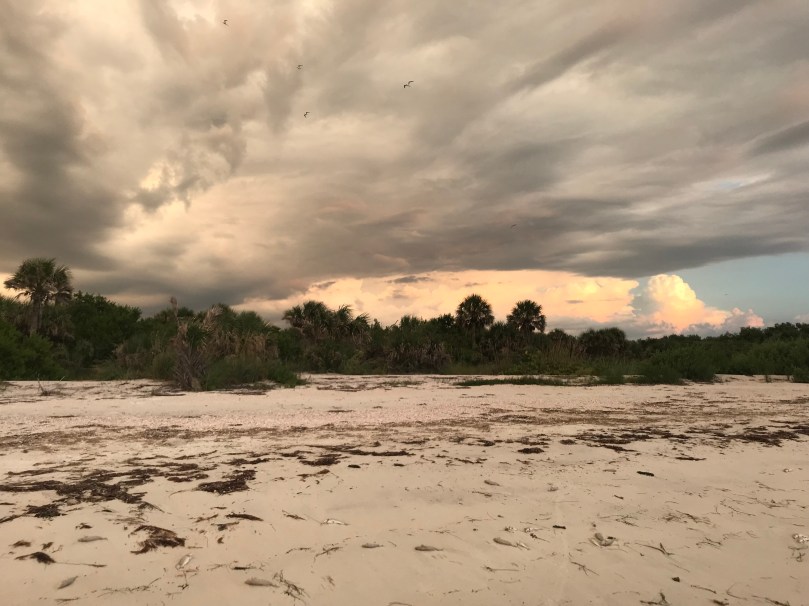
Red Tide! Miles and miles of dead fish. Each day you can see it make its way up the food chain. This might be the last walk for a while. Grrrrrrrrrrrrrrrr


The White Castle Impossible Burger Is a Cult Hit. Now the Veggie Slider Is Going National
I think it is kinda cool and interesting that “vegetarian burgers” are going mainstream. At the same time, I can’t help thinking this is just more processed food. Be it Beyond Meat or The Impossible Burger these are both like super-processed food. I can’t think of a really healthy processed food? Why not just eat portabello burgers?
Utilities have a problem: the public wants 100% renewable energy, and quick
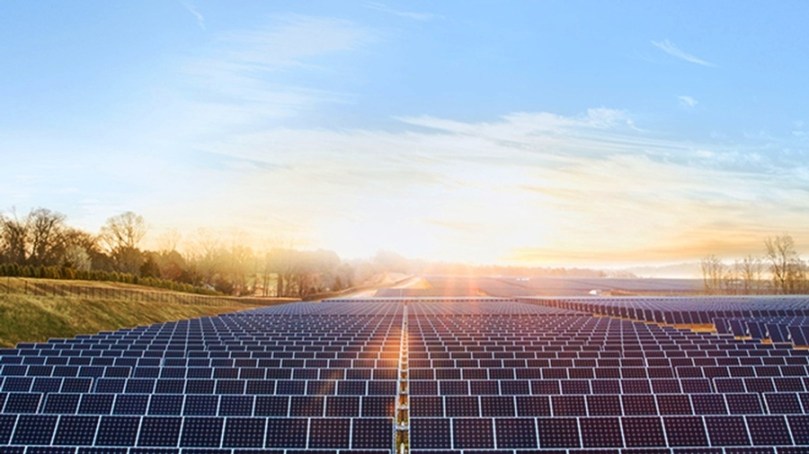
A majority of those surveyed (51 percent) believe that 100 percent renewables is a good idea even if it raises their energy bills by 30 percent.
That is wild. As anyone who’s been in politics a while knows, Americans don’t generally like people raising their bills, much less by a third. A majority that still favors it? That is political dynamite.
Insofar as utilities were in a public relations war over renewables, they’ve lost. They face a tidal wave.
Power To The People!!!!
NORTH CAROLINA CHOSE TO IGNORE ITS DANGEROUS SEA LEVELS YEARS BEFORE HURRICANE FLORENCE HIT
In 2012, North Carolina legislators passed a bill that barred policymakers and developers from using up-to-date climate science to plan for rising sea levels on the state’s coast. Now Hurricane Florence threatens to cause a devastating storm surge that could put thousands of lives in danger and cost the state billions of dollars worth of damage.
The hurricane, which is expected to make landfall on Friday, is shaping up to be one of the worst storms to hit the East Coast. Residents of North Carolina’s Outer Banks and mainland coasts have already been ordered to evacuate. President Donald Trump declared a state of emergency in both North and South Carolina, and a Federal Emergency Management Agency administrator said that the Category 4 hurricane will likely cause “massive damage to our country.”
And the rise in sea levels, experts say, is making the storm surge worse.
Huh.
 Dean’s List