Apple’s sorta powered by 100 percent renewable energy worldwide

(The Verge)

Apple announced today that its business is now powered by 100 percent renewable energy sources. The news is a major victory that the iPhone maker has been working toward for years through the purchase of green energy bonds and other renewable investments in its supply chain and physical infrastructure. The company’s last milestone, announced two years ago, was 93 percent of its worldwide operations running on clean energy.

The announcement comes just one week after Google announced that it now purchases enough renewable energy to offset its global energy consumption. Similarly, Apple’s global operations, including some suppliers in China and facilities in places without access to clean energy, are not technically 100 percent renewable, meaning not every single joule or electron used is initially created by wind, solar, or other green energy plants and farms.

Hooray!!! (sorta)
Yes, Studying the Humanities Might Make You a Better Person

Slate
Researchers found that the higher the humanities exposure, the higher these students scored on measures of empathy, wisdom, tolerance of ambiguity, resourcefulness, and emotional intelligence, and the lower they scored in signs of burnout.

From personal experience, the people most in need of greater “empathy, wisdom, tolerance of ambiguity, resourcefulness, and emotional intelligence” are the last to ever think they are deficient in any way.  Additionally, they are also usually void of any interest in any aspect of the humanities.


For Chronic Pain, A Change In Habits Can Beat Opioids For Relief

(NPR)

There’s a growing consensus among pain specialists that a low-tech approach focused on lifestyle changes can be more effective . . .

Roughly a third of Americans live with chronic pain, and many of them become dependent on opioids prescribed to treat it. But there’s a growing consensus among pain specialists that a low-tech approach focused on lifestyle changes can be more effective.

This kind of treatment can be more expensive — and less convenient — than a bottle of pills. But pain experts say it can save money over the long term by helping patients get off addictive medications and improving their quality of life.

A Brain-Boosting Prosthesis Moves From Rats To Humans

(Wired)

If you want to get technical, the brain-booster in question is a “closed-loop hippocampal neural prosthesis.  Closed loop because the signals passing between each patient’s brain and the computer to which it’s attached are zipping back and forth in near-real-time. Hippocampal because those signals start and end inside the test subject’s hippocampus, a seahorse-shaped region of the brain critical to the formation of memories. “We’re looking at how the neurons in this region fire when memories are encoded and prepared for storage,” says Robert Hampson, a neuroscientist at Wake Forest Baptist Medical Center and lead author of the paper describing the experiment in the latest issue of the Journal of Neural Engineering

Chefs and seed breeders collaborate to create flavorful new foods

From The Splendid Table
The unfortunate reality about seeds is that most are not bred and selected for flavor. Rather, they are chosen specifically for the yield, uniformity and shelf stability of their fruit or vegetable. Chef Dan Barber wants to change that. The chef-owner of Blue Hill and Blue Hill at Stone Barns wants to help create seeds that bring forth new foods with unexpected and unique flavors. Which is why he – along with seedsman Matthew Goldfarb and seed breeder Michael Mazourek – cofounded of a new seed company called Row 7. They work directly with professional chefs, who give guidance on what flavors to breed for in their vegetables. Barber explained to Francis Lam that this type of partnership could change how and what we all eat. See the Cook + Grow section of Row 7’s website for more information on growing and cooking with their unique
produce

Do Older Adults Make New Brain Cells After All?

(The Guardian)

Humans continue to produce new neurons in a part of their brain involved in learning, memory and emotion throughout adulthood, scientists have revealed, countering previous theories that production stopped after adolescence. The findings could help in developing treatments for neurological conditions such as dementia.

Many new neurons are produced in the hippocampus in babies, but it has been a matter of hot debate whether this continues into adulthood – and if so, whether this rate drops with age as seen in mice and nonhuman primates.

Although some research had found new neurons in the hippocampus of older humans, a recent study scotched the idea, claiming that new neurons in the hippocampus were at undetectable levels by our late teens.

Now another group of scientists have published research that pushes back, revealing the new neurons are produced in this brain region in human adults and does not drop off with age. The findings, they say, could help in the hunt for ways to treat conditions ranging from Alzheimer’s to psychiatric problems.

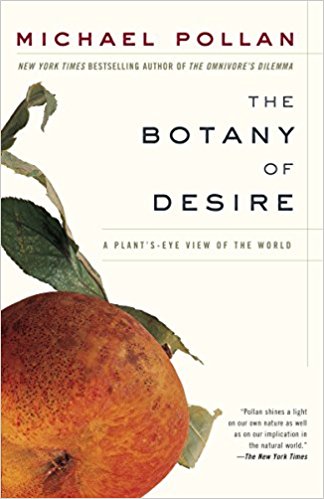
The Botany of Desire​​

51rL+Xh+uFL._SX322_BO1,204,203,200_

You know those authors and books you are “familiar with” but have never really read?  Pssst . . . .that is my relationship with Michael Pollan and most of his work. But thanks to the fine people at NPR and Book TV as well as his bookstore signings on YouTube I’ve always felt fairly conversant in “Pollanynesian.” But this week I am going native!  Michael Pollan has a new book coming out and I want to feel reasonably versed in his major works so I am starting with The Botany of Desire.

My first impression is really structural.  Remember how I said if I had to teach a course on the memoir I would use Wild as an instructive example.  Well, this would be my instructive example of how to write a really compelling well structured tight nonfiction book.  It’s a smart compelling read.

I have one quibble. I think he might be wrong about the term “hard cider” which he says is a 20th-century term.  I offer this because I just finished that book on Louisa May Alcott which contains the following bit from her personal journals:

“Another turn at “ Moods,” which I remodelled. From the 2d to the 25th I sat writing, with a run at dusk; could not sleep, and for three days was so full of it I could not stop to get up. Mother made me a green silk cap with a red bow, to match the old green and red party wrap, which I wore as a “ glory cloak.” Thus arrayed I sat in groves of manuscripts, “ living for immortality,” as May said. Mother wandered in and out with cordial cups of tea, worried because I could n’t eat. Father thought it fine, and brought his reddest apples and hardest cider for my Pegasus to feed upon. All sorts of fun was going on; but I didn’t care if the world returned to chaos if I and my inkstand only “lit” in the same place.”


Louisa May Alcott: The Women Behind Little​ Women

51p-Yg8QkeL._SX322_BO1,204,203,200_

I felt the need to do one more book in my accidental chick-lit series.  Many of these books have been in all or part memoir.  And in that sense, they all owe a debt to the mighty LMA!   I love Louisa May Alcott.  Now some of you may be thinking that’s just because Winona Ryder played Jo March in Little Women.  But that is not true. OK, that’s not entirely true. Let’s just agree that it is only a factor and move on.  I love her because she is amazing, brilliant, passionate, prolific and a saint.  The woman is a freaking saint!  Fun fact, since their initial publication all of Louisa May Alcott’s juvenile fiction, the March books, has ever been out of print.   Walden was initially a failure.  Moby Dick was initially a failure.  Mark Twain only wrote Tom Sawyer after how well he saw how well Little Women sold.  All and this and you can learn from this book.

Addiction Rehab Is Broken. Can Technology Fix It?

(Wired) 

Is there an App for THAT!
ZacherySiegel’stime in rehab for an opioid addiction left him humiliated and desperate to know why his friends were dying. So he researched a new wave of app developers are trying to do things differently

Apple’s Health app can now display medical records from 39 health systems

(The Verge)

iPhone users at more than 100 hospitals and clinics in the US can now access parts of their medical records through the Health app, Apple announced today. The Health Records section of the app debuted in January with the iOS 11.3 beta, and today’s update makes it available to everyone who updates their phone to the latest version.

The medical information — such as allergies, medical conditions, vaccinations, lab tests, medical procedures, and vitals — will be available to iPhone users who are patients at 39 health systems that are working with Apple, including Stanford Medicine and Johns Hopkins.