Losing Earth: The Decade We Almost Stopped Climate Change

Unknown-1.jpeg
(New York Times)

Editor’s Note
This narrative by Nathaniel Rich is a work of history, addressing the 10-year period from 1979 to 1989: the decisive decade when humankind first came to a broad understanding of the causes and dangers of climate change. Complementing the text is a series of aerial photographs and videos, all shot over the past year by George Steinmetz. With support from the Pulitzer Center, this two-part article is based on 18 months of reporting and well over a hundred interviews. It tracks the efforts of a small group of American scientists, activists and politicians to raise the alarm and stave off catastrophe. It will come as a revelation to many readers — an agonizing revelation — to understand how thoroughly they grasped the problem and how close they came to solving it. Jake Silverstein

Dean’s Note
This is heartbreaking

Cooked

cooked.jpg

In discussing my reading through Michale Pollan’s oeuvre I have often commented on my appreciation for his four-part structure.  I am happy to say that he has returned to this structure for Cooked.  I must admit though it left me unsatiated.  You know what I learned most listening to this book?  Listening to someone talk about food and cooling for hours on end makes you hungry.

Let me explain.

Each of the four sections this book is dedicated to one of the four elements Fire, Water, Air, and Earth and how these elements are used to “cook” food.  In the first section, Pollan discusses the culture and process of using fire to transform a dead hog into BBQ.  I rarely eat anything “meaty” and pork is pretty much an abstract concept so the first section while sounding tasty did not make me hungry.  But every other section did.

Section two (water) is on pot cookery, casseroles and braises, you can cook a lot of yummy vegetarian things in a pot.  Plus all that talk of chopping and cooking yummy vegetarian things tends to get my mind going. Suddenly I am in a much nicer kitchen than I have, making something yummy and all clean up will be taken care of when my hunger-inducing daydream ends.  That is not the case in reality. That is not the case in reality.

Section three (air) is about bread.  I love bread!  Really, who doesn’t love bread?  Even people with celiac love bread.  He makes bread sound so good!  Celiac runs in my family and I am probably ever so slightly “on the spectrum” if that’s a thing that I have pretty much taken it out of my diet.  So for me, this section was like being an addict and walking into some den of inequity — where your drug of choice was all you can eat free of charge.  I was seriously contemplating starting to make my own sourdough bread until Pollan woke me from this delirium with the words “white bread.”  He spends page after page reminding me of all the ways I LOVE to eat bread before he reminds me this is basically POISON.   I will say that this section also convinced me of the importance of a little — just a little — locally made whole grain bread in my diet.  What about the Celiac issue?  As he says, it seems to be less of an issue with me with whole grain bread.

Which brings us to the fourth section (earth) about fermentation. Pollan actually ends up making beer.  I have a sense of coming full circle here because I am only slightly more likely to drink beer than eat pork.  I will drink a little beer, usually a sip for taste and more rarely a bottle, or part thereof, to be social.  I used to love beer.  But one day I realized that my family’s tendency for Celiac trumped my love of beer.  Leading up to his decision to ferment beer Pollan talks reasonably in depth about the importance of eating fermented food.  Was it enticing?    Well, presently I am trying to figure out how to make sauerkraut.  I’ll let you know how that goes.

This book will make you hungry.


For Many College Students, Hunger ‘Makes It Hard To Focus’

(NPR)
As students enter college this fall, many will hunger for more than knowledge. Up to half of college students in recent published studies say they either are not getting enough to eat or are worried about it.

This food insecurity is most prevalent at community colleges, but it’s common at public and private four-year schools as well.

Student activists and advocates in the education community have drawn attention to the problem in recent years, and the food pantries that have sprung up at hundreds of schools are perhaps the most visible sign. Some schools nationally also have instituted the Swipe Out Hunger program, which allows students to donate their unused meal plan vouchers, or “swipes,” to other students to use at campus dining halls or food pantries.

That’s a start, say analysts studying the problem of campus hunger, but more systemwide solutions are needed.


The Quietest Place in America Is Becoming a Warzone

(Gizmodo)
After years of painstaking acoustic measurements, Hempton identified this spot on Washington’s Olympic Peninsula as the quietest place in the U.S.—the spot most free of our man-made noise pollution. He has nurtured this square inch, guided people to it, and protected it from encroaching cacophony of our modern world. But now it faces its biggest threat yet.

Some Colleges Cautiously Embrace Wikipedia

(Chronicle of Higher Education)
Academics have traditionally distrusted Wikipedia, citing the inaccuracies that arise from its communally edited design and lamenting students’ tendency to sometimes plagiarize assignments from it.

Now, Davis said, higher education and Wikipedia don’t seem like such strange bedfellows. At conferences these days, “everyone’s like, ‘Oh, Wikipedia, of course you guys are here.’”

“I think it’s a recognition that Wikipedia is embedded within the fabric of learning now,” she said.

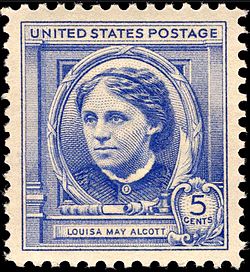
Thoreau-Back Thursday 7/26/18

Screen Shot 2018-07-25 at 8.59.30 PM

“America, if eligible at all to downfall and ruin, is eligible within herself, not without; for I see clearly that the combined foreign world could not beat her down. But these savage, wolfish parties alarm me. Owning no law but theirOWIl will, more and more combative, less and less tolerant of the idea of ensemble and of equal brotherhood, t.he perfect equality of the States, the ever-overarching American ideas, it behooves you to convey yourself implicitly to no party, nor submit blindly to their dictators, but steadily hold yourself judge and mastery over all of them.”   — Walt Whitman


A Major Victory For The Impossible Burger, The Veggie ‘Meat’ That Bleeds

(Wired)
Impossible Foods pulled its notice and resubmitted with additional safety studies done on rats. And on Monday, in a win for the faux meat startup, the FDA came back with no further questions. “Based on the information that Impossible Foods provided, as well as other information available to FDA,” the agency wrote in a letter to the startup, “we have no questions at this time regarding Impossible Foods’ conclusion that soy leghemoglobin preparation is GRAS under its intended conditions of use to optimize flavor in ground beef analogue products intended to be cooked.” Meaning, the FDA needs no further clarifications on Impossible Foods’ arguments that consuming soy leghemoglobin in the Impossible Burger will not have adverse impacts on human health.