DEA Wants More Marijuana Grown And Fewer Opioids Produced In 2019.

(Forbes)

The Drug Enforcement Administration (DEA) isn’t exactly known as big fan of marijuana. But in a new Federal Register filing set to be published soon, the anti-drug agency is moving to more than quintuple the amount of cannabis that can legally be grown in the U.S. for research purposes—from roughly 1,000 pounds in 2018 to more than 5,400 pounds next year.

Could have told you that like a decade ago.

The Obliteration of Night: On the Consequences of Electric Light

d3817cf072c1ef04c0c7c735d83f078f.jpg
(Undark.org)

I expressed the first serious concern about the potential health consequences of electric light at night 30 years ago, when I asked whether over-lighting might increase the risk of breast cancer. It was during the 1980s, just as researchers were finding that a fatty Western diet might not much alter the breast-cancer risk in individuals, that a friend from the Fred Hutchinson Cancer Research Center in Seattle pointed me to research on the impact of melatonin. Lowered levels of melatonin (an effect of over-lighting) had been traced to heightened levels of oestrogen (at least in rodents), a clear breast-cancer risk factor when fatty diets were not. Later evidence has shown that women who work the night shift are at higher breast-cancer risk. Evidence suggests that circadian disruption from over-lighting the night could be related to risk of obesity and depression as well. In fact, it might be that virtually all aspects of health and wellbeing are dependent to one extent or another on a synchronized circadian rhythmicity, with a natural cycle of bright days and dark nights.

This makes me very​ happy about preference​ for a firelight level of light at night.

Putting a finer point on the risk is ‘The New World Atlas of Artificial Night Sky Brightness’, published in 2016. The atlas uses data from NASA’s Suomi National Polar-orbiting Partnership satellite to estimate skyglow across the globe. The images in the atlas are either dazzling or horrifying, depending on how you look at it. In its colored maps of cities and countries, using brighter colors to show greater skyglow, Europe and North America appear ablaze. According to the atlas, the Milky Way cannot be seen at night by one-third of humans. In Europe, it’s not visible to 60 percent of people, and in North America, it’s a whopping 80 percent.

That would be me.
The Long Arc Bends Towards Breeches

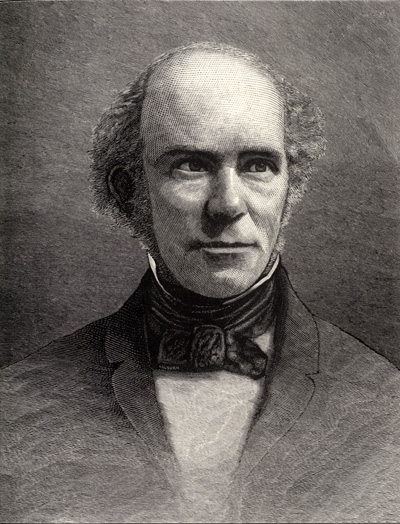
Theodore-Parker.jpg
\

Alas for churches in New England! We be all dead men, for the Transcendentalists have come! They say there is no Christ; no God; no soul; only “an absolute nothing,” and Hegel is the Holy Ghost. Our churches will be pulled down; there will be no Sabbath; our wive’s will wear the breeches, and the Transcendentalists will ride over us rough shod.   -Theodore​ Parker

The Lie of Little Women

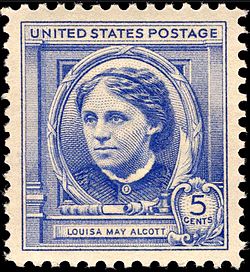
Louisa_May_Alcott_5c_1940_issue.JPG

(The Atlantic)

Alcott herself took a more skeptical view of her enterprise. She was reluctant to try her hand at a book for girls, a kind of writing she described later in life as “moral pap for the young.” Working on it meant exploring the minds and desires of youthful females, a dismal prospect. (“Never liked girls or knew many,” she wrote in her diary, “except my sisters.”) While writing Little Women, Alcott gave the fictional Marches the same nickname she used for her own tribe: “the Pathetic Family.” By the final chapter of Jo’s Boys, the second of two novels that followed Little Women, Alcott didn’t try to hide her fatigue with her characters, and with her readers’ insatiable curiosity about them. In a blunt authorial intrusion, she declared that she was tempted to conclude with an earthquake that would engulf Jo’s school “and its environs so deeply in the bowels of the earth that no [archaeologist] could ever find a vestige of it.”

Why now? Why is this piece being published in The Atlantic now? Something feels afoot here.