What genuine, no-bullshit ambition on climate change would look like

photo-1457728940372-39f8bf47f3d7.jpeg
(Vox)

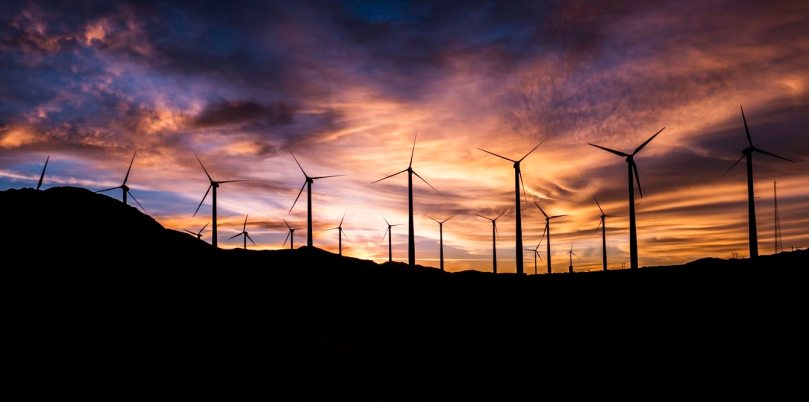
What would it take to really tackle climate change? No delays, no gimmicks, no loopholes, no shirking of responsibility — the real thing. What would it look like?

To answer that question, it helps to understand the upper threshold of climate ambition. The target agreed upon by the world’s nations in Paris in 2015 is global warming of “well below” 2 degrees Celsius, with good-faith efforts to hold temperature rise to 1.5 degrees.

Countries are not moving anywhere near fast enough to hit those targets, so we are currently on track for somewhere around 3 degrees. It is generally agreed that hitting 2 degrees would be quite ambitious, while hitting 1.5 would be nothing short of miraculous. Yet the scientists at the Intergovernmental Panel on Climate Change, in their latest report, are pleading with the world to go for it, because at this point, every fraction of a degree of warming matters.

This is what planetary​ deferred​ maintenance looks like.

A massive plastic cleanup project provokes hope and skepticism

photo-1526951521990-620dc14c214b.jpeg

(PBS News Hour)

In 2015, marine biologist Andrew Thaler raised concerns that the huge booms could attract or harm ocean-going animals. Earlier this year, shark researcher David Shiffman polled some fellow scientists about their concerns, and found that few believed the cleanup would solve more problems than it would cause.

When oceanographers Kim Martini and Miriam Goldstein reviewed a previous version of the system in 2014, they criticized the design’s resilience against ocean forces. Martini and Goldstein claimed the system carried a potential for failure in the storms that frequently roil the Pacific Ocean.

Others said that regardless of the system’s ability to safely collect trash from the ocean’s surface, it misses the real problems behind oceanic plastic.

Studies estimate that 60 to 70 percent of ocean plastic eventually sinks to the seafloor, far from a floating collection boom. Plastic trash has even been found in the Marianas Trench, the most remote and deepest part of the Pacific Ocean.

Let’s get rid of plastic. Global Ban. I’m serious.

Walking (Part IV)

IMG_7780.jpg

Linnaeus said long ago, “Nescio quae facies laeta, glabra plantis Americanis” (I know not what there is of joyous and smooth in the aspect of American plants); and I think that in this country there are no, or at most very few, Africanae bestiae, African beasts, as the Romans called them, and that in this respect also it is peculiarly fitted for the habitation of man. We are told that within three miles of the center of the East-Indian city of Singapore, some of the inhabitants are annually carried off by tigers; but the traveler can lie down in the woods at night almost anywhere in North America without fear of wild beasts.
These are encouraging testimonies. If the moon looks larger here than in Europe, probably the sun looks larger also. If the heavens of America appear infinitely higher, and the stars brighter, I trust that these facts are symbolical of the height to which the philosophy and poetry and religion of her inhabitants may one day soar. At length, perchance, the immaterial heaven will appear as much higher to the American mind, and the intimations that star it as much brighter. For I believe that climate does thus react on man—as there is something in the mountain air that feeds the spirit and inspires. Will not man grow to greater perfection intellectually as well as physically under these influences? Or is it unimportant how many foggy days there are in his life? I trust that we shall be more imaginative, that our thoughts will be clearer, fresher, and more ethereal, as our sky—our understanding more comprehensive and broader, like our plains—our intellect generally on a grander seale, like our thunder and lightning, our rivers and mountains and forests—and our hearts shall even correspond in breadth and depth and grandeur to our inland seas. Perchance there will appear to the traveler something, he knows not what, of laeta and glabra, of joyous and serene, in our very faces. Else to what end does the world go on, and why was America discovered?

To Americans I hardly need to say,

“Westward the star of empire takes its way.”

As a true patriot, I should be ashamed to think that Adam in paradise was more favorably situated on the whole than the backwoodsman in this country.

Our sympathies in Massachusetts are not confined to New England; though we may be estranged from the South, we sympathize with the West. There is the home of the younger sons, as among the Scandinavians they took to the sea for their inheritance. It is too late to be studying Hebrew; it is more important to understand even the slang of today.

Some months ago I went to see a panorama of the Rhine. It was like a dream of the Middle Ages. I floated down its historic stream in something more than imagination, under bridges built by the Romans, and repaired by later heroes, past cities and castles whose very names were music to my ears, and each of which was the subject of a legend. There were Ehrenbreitstein and Rolandseck and Coblentz, which I knew only in history. They were ruins that interested me chiefly. There seemed to come up from its waters and its vine-clad hills and valleys a hushed music as of Crusaders departing for the Holy Land. I floated along under the spell of enchantment, as if I had been transported to an heroic age, and breathed an atmosphere of chivalry.

Soon after, I went to see a panorama of the Mississippi, and as I worked my way up the river in the light of today, and saw the steamboats wooding up, counted the rising cities, gazed on the fresh ruins of Nauvoo, beheld the Indians moving west across the stream, and, as before I had looked up the Moselle, now looked up the Ohio and the Missouri and heard the legends of Dubuque and of Wenona’s Cliff—still thinking more of the future than of the past or present—I saw that this was a Rhine stream of a different kind; that the foundations of castles were yet to be laid, and the famous bridges were yet to be thrown over the river; and I felt that this was the heroic age itself, though we know it not, for the hero is commonly the simplest and obscurest of men.

The West of which I speak is but another name for the Wild; and what I have been preparing to say is, that in Wildness is the preservation of the World. Every tree sends its fibers forth in search of the Wild. The cities import it at any price. Men plow and sail for it. From the forest and wilderness come the tonics and barks which brace mankind. Our ancestors were savages. The story of Romulus and Remus being suckled by a wolf is not a meaningless fable. The founders of every state which has risen to eminence have drawn their nourishment and vigor from a similar wild source. It was because the children of the Empire were not suckled by the wolf that they were conquered and displaced by the children of the northern forests who were.

I believe in the forest, and in the meadow, and in the night in which the corn grows. We require an infusion of hemlock, spruce or arbor vitae in our tea. There is a difference between eating and drinking for strength and from mere gluttony. The Hottentots eagerly devour the marrow of the koodoo and other antelopes raw, as a matter of course. Some of our northern Indians eat raw the marrow of the Arctic reindeer, as well as various other parts, including the summits of the antlers, as long as they are soft. And herein, perchance, they have stolen a march on the cooks of Paris. They get what usually goes to feed the fire. This is probably better than stall-fed beef and slaughterhouse pork to make a man of. Give me a wildness whose glance no civilization can endure—as if we lived on the marrow of koodoos devoured raw.

There are some intervals which border the strain of the wood thrush, to which I would migrate—wild lands where no settler has squatted; to which, methinks, I am already acclimated.

The African hunter Cumming tells us that the skin of the eland, as well as that of most other antelopes just killed, emits the most delicious perfume of trees and grass. I would have every man so much like a wild antelope, so much a part and parcel of nature, that his very person should thus sweetly advertise our senses of his presence, and remind us of those parts of nature which he most haunts. I feel no disposition to be satirical, when the trapper’s coat emits the odor of musquash even; it is a sweeter scent to me than that which commonly exhales from the merchant’s or the scholar’s garments. When I go into their wardrobes and handle their vestments, I am reminded of no grassy plains and flowery meads which they have frequented, but of dusty merchants’ exchanges and libraries rather.

A tanned skin is something more than respectable, and perhaps olive is a fitter color than white for a man—a denizen of the woods. “The pale white man!” I do not wonder that the African pitied him. Darwin the naturalist says, “A white man bathing by the side of a Tahitian was like a plant bleached by the gardener’s art, compared with a fine, dark green one, growing vigorously in the open fields.”

Ben Jonson exclaims,

“How near to good is what is fair!”

So I would say,

“How near to good is what is wild!”

Life consists with wildness. The most alive is the wildest. Not yet subdued to man, its presence refreshes him. One who pressed forward incessantly and never rested from his labors, who grew fast and made infinite demands on life, would always find himself in a new country or wilderness, and surrounded by the raw material of life. He would be climbing over the prostrate stems of primitive forest-trees.

Hope and the future for me are not in lawns and cultivated fields, not in towns and cities, but in the impervious and quaking swamps. When, formerly, I have analyzed my partiality for some farm which I had contemplated purchasing, I have frequently found that I was attracted solely by a few square rods of impermeable and unfathomable bog—a natural sink in one corner of it. That was the jewel which dazzled me. I derive more of my subsistence from the swamps which surround my native town than from the cultivated gardens in the village. There are no richer parterres to my eyes than the dense beds of dwarf andromeda (Cassandra calyculata) which cover these tender places on the earth’s surface. Botany cannot go farther than tell me the names of the shrubs which grow there—the high blueberry, panicled andromeda, lambkill, azalea, and rhodora—all standing in the quaking sphagnum. I often think that I should like to have my house front on this mass of dull red bushes, omitting other flower plots and borders, transplanted spruce and trim box, even graveled walks—to have this fertile spot under my windows, not a few imported barrowfuls of soil only to cover the sand which was thrown out in digging the cellar. Why not put my house, my parlor, behind this plot, instead of behind that meager assemblage of curiosities, that poor apology for a Nature and Art, which I call my front yard? It is an effort to clear up and make a decent appearance when the carpenter and mason have departed, though done as much for the passer-by as the dweller within. The most tasteful front-yard fence was never an agreeable object of study to me; the most elaborate ornaments, acorn tops, or what not, soon wearied and disgusted me. Bring your sills up to the very edge of the swamp, then (though it may not be the best place for a dry cellar), so that there be no access on that side to citizens. Front yards are not made to walk in, but, at most, through, and you could go in the back way.

Yes, though you may think me perverse, if it were proposed to me to dwell in the neighborhood of the most beautiful garden that ever human art contrived, or else of a Dismal Swamp, I should certainly decide for the swamp. How vain, then, have been all your labors, citizens, for me!

My spirits infallibly rise in proportion to the outward dreariness. Give me the ocean, the desert, or the wilderness! In the desert, pure air and solitude compensate for want of moisture and fertility. The traveler Burton says of it: “Your morale improves; you become frank and cordial, hospitable and single-minded…. In the desert, spirituous liquors excite only disgust. There is a keen enjoyment in a mere animal existence.” They who have been traveling long on the steppes of Tartary say, “On re-entering cultivated lands, the agitation, perplexity, and turmoil of civilization oppressed and suffocated us; the air seemed to fail us, and we felt every moment as if about to die of asphyxia.” When I would recreate myself, I seek the darkest woods the thickest and most interminable and, to the citizen, most dismal, swamp. I enter a swamp as a sacred place, a sanctum sanctorum. There is the strength, the marrow, of Nature. The wildwood covers the virgin mould, and the same soil is good for men and for trees. A man’s health requires as many acres of meadow to his prospect as his farm does loads of muck. There are the strong meats on which he feeds. A town is saved, not more by the righteous men in it than by the woods and swamps that surround it. A township where one primitive forest waves above while another primitive forest rots below—such a town is fitted to raise not only corn and potatoes, but poets and philosophers for the coming ages. In such a soil grew Homer and Confucius and the rest, and out of such a wilderness comes the Reformer eating locusts and wild honey.

To preserve wild animals implies generally the creation of a forest for them to dwell in or resort to. So it is with man. A hundred years ago they sold bark in our streets peeled from our own woods. In the very aspect of those primitive and rugged trees there was, methinks, a tanning principle which hardened and consolidated the fibers of men’s thoughts. Ah! already I shudder for these comparatively degenerate days of my native village, when you cannot collect a load of bark of good thickness, and we no longer produce tar and turpentine.

The civilized nations—Greece, Rome, England—have been sustained by the primitive forests which anciently rotted where they stand. They survive as long as the soil is not exhausted. Alas for human culture! little is to be expected of a nation, when the vegetable mould is exhausted, and it is compelled to make manure of the bones of its fathers. There the poet sustains himself merely by his own superfluous fat, and the philosopher comes down on his marrow-bones.

Hopkins researchers recommend reclassifying psilocybin, the drug in ‘magic’ mushrooms, from schedule I to schedule IV

photo-1531038920272-f16fb0ca5b62.jpeg
(HUB)

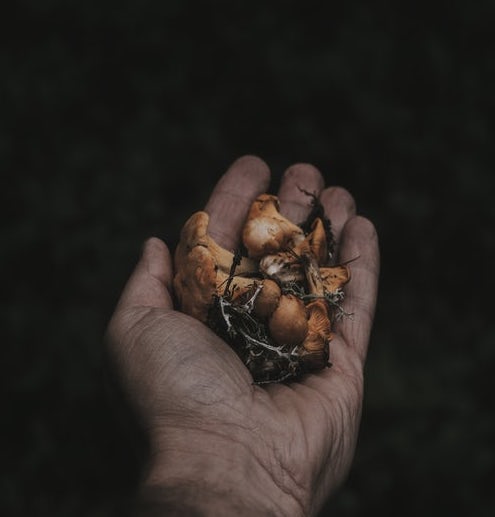
Although psilocybin is relatively less harmful than other drugs and not prone to compulsive abuse, the researchers don’t recommend releasing psilocybin into patients’ hands even with a prescription. “We believe that the conditions should be tightly controlled and that when taken for a clinical reason, it should be administered in a health care setting, monitored by a person trained for that situation,” says Johnson. The researchers foresee that the process for psilocybin use in the clinic would be similar to how an anesthesiologist prescribes and administers a drug, minimizing the potential for abuse or harm.

Well apparently people have been doing this wrong for 10,000 years and now it needs to be handed over to “pharmaceutical​ professionals​.”

Is fasting the fountain of youth?

(CNN)

photo-1538207059604-1c3294aacfac.jpeg

So far, research has revealed promising results. One study published last year divided 100 people, all free of disease, into two groups. For three months, participants either ate whatever they wanted, or consumed between 800 and 1,100 calories for only five days out of the month — a pattern researchers refer to as a “fasting mimicking diet” or “FMD.” At the end of the study period, participants on the FMD who were at risk for disease saw their fasting glucose, an indicator of diabetes risk, return to normal. Markers for heart disease, along with high levels of cholesterol and triglycerides, decreased, as did levels of the 1GF1 marker of various cancers. Additionally, participants lost abdominal fat, while preserving lean muscle mass and metabolism, which is often sacrificed on a lower calorie diet.

As someone how is notorious for forgetting to eat this all sounds good to me.

Outdoor recreation is a large and growing percentage of U.S. economy

(SNEWS)

Screen Shot 2018-09-30 at 11.15.16 PM.png

“OIA’s analysis shows that Americans spend $887 billion annually recreating outside,” Roberts said in a news release. “All of this data underscores that outdoor recreation is a significant and growing contributor to the U.S. economy—we strongly encourage members of Congress to invest in public lands as these numbers demonstrate the return on investment.”

The figure places the outdoor industry on the same level as other industries, if not larger. It’s heftier than oil and gas extraction (1.4 percent) and agriculture (1 percent).

Let’s go over that last point again: “It’s heftier than oil and gas extraction (1.4 percent) and agriculture (1 percent).”

Is Your Salad Habit Good for the Planet?

(The New York Times)
photo-1533777857889-4be7c70b33f7.jpeg

“That’s why I think Sweetgreen is taking off,” she said. “People don’t want to feel heavy because they want to feel productive.”

The trash cans, however, are getting very heavy indeed. Robert Buffolino, the general manager of American Recycling Management in Jamaica, Queens, said that it would be difficult to evaluate systematically whether the number of salad bowls in garbage cans had actually increased.

But if you were asking him anecdotally? “Yeah, sure, there’s been an increase. Just by sight and sound, sure.”

Moreover, “most waste occurs at the consumer level,” said Marc Bellemare, who directs the Center for International Food and Agricultural Policy at the University of Minnesota. “Restaurants and grocery stores don’t waste as much as consumers do.” He added, “most of what gets wasted is not frozen pizza, it’s not ice cream, it’s produce, it’s stuff that goes in salad. I suspect that the rise of those restaurants, my intuition is that those will mean the rise of food waste as well, because they sell this stuff to consumers, where the bulk of the losses tend to occur.”

It’s not just the food, it’s the food system.


Ken Burns Isn’t Mad

burns_ken-new.jpg
(Huffington Post)

Well, I am glad someone isn’t mad.  That’s a short list these days.  Maxwell Strachan’s Tagline for this article is:  “The “far, far left,” “far, far right” and “third- and fourth-rate academics” are all wrong about America’s most famous documentary filmmaker. Just ask him.”  Maybe I am just being cranky but I am a little over the peanut gallery, be they peanuts from the left or right.

Ken Burns is probably the most successful documentary filmmaker in America. I would argue that he even changed the way documentaries are made.  I am not saying this because Apple made a filter called the Ken Burns effect and didn’t need explanation.  I am talking about how he created these long multipart narratives.  There wasn’t a lot of that before Burns and he is still probably the singular most pervasive talent employing this technique.  Also the longer Ken Burns has been around the more other documentaries start to look like his.

While it’s completely fair to critique Burns or any other artist, the sort of blanket attack that Strachan and Burns are discussing just make me want to roll my eyes and issue one of two responses. (1) I understand you have a different point of view but can you make it without comparing him to Leni Riefenstahl.  (2) Maybe you should make your own beautifully written and filmed documentary to set us all straight.  Oh, you don’t want to do that?  Why don’t you sit down and eat some popcorn while we watch Episodes I – III of Star Wars. Sshhh!


What the Public Lands Are Truly Worth

(The New Republic)

photo-1529288871968-9945adb0588f.jpeg

A new book argues that America’s forests and streams provide far more value than they cost to support.

“The rights of posterity​ are more important​ than​ the desires​ of the present.” — Fredrick Law Olmsted.

Walking (Part III)

IMG_7768.jpg

Some do not walk at all; others walk in the highways; a few walk across lots. Roads are made for horses and men of business. I do not travel in them much, comparatively, because I am not in a hurry to get to any tavern or grocery or livery-stable or depot to which they lead. I am a good horse to travel, but not from choice a roadster. The landscape-painter uses the figures of men to mark a road. He would not make that use of my figure. I walk out into a nature such as the old prophets and poets, Menu, Moses, Homer, Chaucer, walked in. You may name it America, but it is not America; neither Americus Vespueius, nor Columbus, nor the rest were the discoverers of it. There is a truer amount of it in mythology than in any history of America, so called, that I have seen.

However, there are a few old roads that may be trodden with profit, as if they led somewhere now that they are nearly discontinued. There is the Old Marlborough Road, which does not go to Marlborough now, me-thinks, unless that is Marlborough where it carries me. I am the bolder to speak of it here, because I presume that there are one or two such roads in every town.

The Old Marlborough Road

Where they once dug for money,

But never found any;

Where sometimes Martial Miles

Singly files,

And Elijah Wood,

I fear for no good:

No other man,

Save Elisha Dugan—

O man of wild habits,

Partridges and rabbits

Who hast no cares

Only to set snares,

Who liv’st all alone,

Close to the bone

And where life is sweetest

Constantly eatest.

When the spring stirs my blood

With the instinct to travel,

I can get enough gravel

On the Old Marlborough Road.

Nobody repairs it,

For nobody wears it;

It is a living way,

As the Christians say.

Not many there be

Who enter therein,

Only the guests of the

Irishman Quin.

What is it, what is it

But a direction out there,

And the bare possibility

Of going somewhere?

Great guide-boards of stone,

But travelers none;

Cenotaphs of the towns

Named on their crowns.

It is worth going to see

Where you might be.

What king Did the thing,

I am still wondering;

Set up how or when,

By what selectmen,

Gourgas or Lee,

Clark or Darby?

They’re a great endeavor

To be something forever;

Blank tablets of stone,

Where a traveler might groan,

And in one sentence

Grave all that is known

Which another might read,

In his extreme need.

I know one or two

Lines that would do,

Literature that might stand

All over the land

Which a man could remember

Till next December,

And read again in the spring,

After the thawing.

If with fancy unfurled

You leave your abode

You may go round the world

By the Old Marlborough Road.

At present, in this vicinity, the best part of the land is not private property; the landscape is not owned, and the walker enjoys comparative freedom. But possibly the day will come when it will be partitioned off into so-called pleasure-grounds, in which a few will take a narrow and exclusive pleasure only—when fences shall be multiplied, and man-traps and other engines invented to confine men to the public road, and walking over the surface of God’s earth shall be construed to mean trespassing on some gentleman’s grounds. To enjoy a thing exclusively is commonly to exclude yourself from the true enjoyment of it. Let us improve our opportunities, then, before the evil days come.

What is it that makes it so hard sometimes to determine whither we will walk? I believe that there is a subtle magnetism in Nature, which, if we unconsciously yield to it, will direct us aright. It is not indifferent to us which way we walk. There is a right way; but we are very liable from heedlessness and stupidity to take the wrong one. We would fain take that walk, never yet taken by us through this actual world, which is perfectly symbolical of the path which we love to travel in the interior and ideal world; and sometimes, no doubt, we find it difficult to choose our direction, because it does not yet exist distinctly in our idea.

When I go out of the house for a walk, uncertain as yet whither I will bend my steps, and submit myself to my instinct to decide for me, I find, strange and whimsical as it may seem, that I finally and inevitably settle southwest, toward some particular wood or meadow or deserted pasture or hill in that direction. My needle is slow to settle, varies a few degrees, and does not always point due southwest, it is true, and it has good authority for this variation, but it always settles between west and south-southwest. The future lies that way to me, and the earth seems more unexhausted and richer on that side. The outline which would bound my walks would be, not a circle, but a parabola, or rather like one of those cometary orbits which have been thought to be non-returning curves, in this case opening westward, in which my house occupies the place of the sun. I turn round and round irresolute sometimes for a quarter of an hour, until I decide, for a thousandth time, that I will walk into the southwest or west. Eastward I go only by force; but westward I go free. Thither no business leads me. It is hard for me to believe that I shall find fair landscapes or sufficient wildness and freedom behind the eastern horizon. I am not excited by the prospect of a walk thither; but I believe that the forest which I see in the western horizon stretches uninterruptedly toward the setting sun, and there are no towns nor cities in it of enough consequence to disturb me. Let me live where I will, on this side is the city, on that the wilderness, and ever I am leaving the city more and more, and withdrawing into the wilderness. I should not lay so much stress on this fact, if I did not believe that something like this is the prevailing tendency of my countrymen. I must walk toward Oregon, and not toward Europe. And that way the nation is moving, and I may say that mankind progress from east to west. Within a few years we have witnessed the phenomenon of a southeastward migration, in the settlement of Australia; but this affects us as a retrograde movement, and, judging from the moral and physical character of the first generation of Australians, has not yet proved a successful experiment. The eastern Tartars think that there is nothing west beyond Thibet. “The world ends there,” say they; “beyond there is nothing but a shoreless sea.” It is unmitigated East where they live.

We go eastward to realize history and study the works of art and literature, retracing the steps of the race; we go westward as into the future, with a spirit of enterprise and adventure. The Atlantic is a Lethean stream, in our passage over which we have had an opportunity to forget the Old World and its institutions. If we do not succeed this time, there is perhaps one more chance for the race left before it arrives on the banks of the Styx; and that is in the Lethe of the Pacific, which is three times as wide.

I know not how significant it is, or how far it is an evidence of singularity, that an individual should thus consent in his pettiest walk with the general movement of the race; but I know that something akin to the migratory instinct in birds and quadrupeds—which, in some instances, is known to have affected the squirrel tribe, impelling them to a general and mysterious movement, in which they were seen, say some, crossing the broadest rivers, each on its particular chip, with its tail raised for a sail, and bridging narrower streams with their dead—that something like the furor which affects the domestic cattle in the spring, and which is referred to a worm in their tails, affects both nations and individuals, either perennially or from time to time. Not a flock of wild geese cackles over our town, but it to some extent unsettles the value of real estate here, and, if I were a broker, I should probably take that disturbance into account.

“Than longen folk to gon on pilgrimages,

And palmeres for to seken strange strondes.”

Every sunset which I witness inspires me with the desire to go to a West as distant and as fair as that into which the sun goes down. He appears to migrate westward daily, and tempt us to follow him. He is the Great Western Pioneer whom the nations follow. We dream all night of those mountain-ridges in the horizon, though they may be of vapor only, which were last gilded by his rays. The island of Atlantis, and the islands and gardens of the Hesperides, a sort of terrestrial paradise, appear to have been the Great West of the ancients, enveloped in mystery and poetry. Who has not seen in imagination, when looking into the sunset sky, the gardens of the Hesperides, and the foundation of all those fables?

Columbus felt the westward tendency more strongly than any before. He obeyed it, and found a New World for Castile and Leon. The herd of men in those days scented fresh pastures from afar,

“And now the sun had stretched out all the hills,

And now was dropped into the western bay;

At last he rose, and twitched his mantle blue;

Tomorrow to fresh woods and pastures new.”

Where on the globe can there be found an area of equal extent with that occupied by the bulk of our States, so fertile and so rich and varied in its productions, and at the same time so habitable by the European, as this is? Michaux, who knew but part of them, says that “the species of large trees are much more numerous in North America than in Europe; in the United States there are more than one hundred and forty species that exceed thirty feet in height; in France there are but thirty that attain this size.” Later botanists more than confirm his observations. Humboldt came to America to realize his youthful dreams of a tropical vegetation, and he beheld it in its greatest perfection in the primitive forests of the Amazon, the most gigantic wilderness on the earth, which he has so eloquently described. The geographer Guyot, himself a European, goes farther—farther than I am ready to follow him; yet not when he says: “As the plant is made for the animal, as the vegetable world is made for the animal world, America is made for the man of the Old World…. The man of the Old World sets out upon his way. Leaving the highlands of Asia, he descends from station to station towards Europe. Each of his steps is marked by a new civilization superior to the preceding, by a greater power of development. Arrived at the Atlantic, he pauses on the shore of this unknown ocean, the bounds of which he knows not, and turns upon his footprints for an instant.” When he has exhausted the rich soil of Europe, and reinvigorated himself, “then recommences his adventurous career westward as in the earliest ages.” So far Guyot.

From this western impulse coming in contact with the barrier of the Atlantic sprang the commerce and enterprise of modern times. The younger Michaux, in his Travels West of the Alleghanies in 1802, says that the common inquiry in the newly settled West was, “‘From what part of the world have you come?’ As if these vast and fertile regions would naturally be the place of meeting and common country of all the inhabitants of the globe.”

To use an obsolete Latin word, I might say, Ex Oriente lux; ex Occidente FRUX. From the East light; from the West fruit.

Sir Franeis Head, an English traveler and a Governor- General of Canada, tells us that “in both the northern and southern hemispheres of the New World, Nature has not only outlined her works on a larger scale, but has painted the whole picture with brighter and more costly colors than she used in delineating and in beautifying the Old World…. The heavens of America appear infinitely higher, the sky is bluer, the air is fresher, the cold is intenser, the moon looks larger, the stars are brighter the thunder is louder, the lightning is vivider, the wind is stronger, the rain is heavier, the mountains are higher, the rivers longer, the forests bigger, the plains broader.” This statement will do at least to set against Buffon’s account of this part of the world and its productions.

Thoreau is really not much of a “Nationalist.” As I understand it “America” wasn’t ever much of a concern to him until after he met Whitman and was given a copy of Leaves of Grass. Walking certainly​ is conceived​ much after their​ meeting and Thoreau’s growing to love Whitman’s writing.​ This is all a long way of saying, man oh man there is a lot of manifest destiny going on in this section​.