Though winter is represented in the almanac as an old man, facing the wind and sleet, and drawing his cloak about him, we rather think of him as a merry woodchopper, and warm-blooded youth, as blithe as summer. The unexplored grandeur of the storm keeps up the spirits of the traveler. It does not trifle with us, but has a sweet earnestness. In winter we lead a more inward life. Our hearts are warm and cheery, like cottages under drifts, whose windows and doors are half concealed, but from whose chimneys the smoke cheerfully ascends. The imprisoning drifts increase the sense of comfort which the house affords, and in the coldest days we are content to sit over the hearth and see the sky through the chimney-top, enjoying the quiet and serene life that may be had in a warm corner by the chimney-side, or feeling our pulse by listening to the low of cattle in the street, or the sound of the flail in distant barns all the long afternoon. No doubt a skillful physician could determine our health by observing how these simple and natural sounds affected us. We enjoy now, not an Oriental, but a Boreal leisure, around warm stoves and fireplaces, and watch the shadow of motes in the sunbeams. — Thoreau
A Winter Walk
From Civil Disobedience

“Take long walks in stormy weather or through deep snows in the fields and woods, if you would keep your spirits up. Deal with brute nature. Be cold and hungry and weary.”
Thoreau, On the Duty of Civil Disobedience
City Parks May Mend the Mind

(Scientific America)
Exposure to natural settings has been linked with a vast array of human health benefits, from reduced rates of depression to increased immune functioning. Two recent studies found evidence suggesting that urban green spaces, such as parks and gardens, may also improve cognitive development and buffer against the effects of health inequality.
The Secret Language of Trees

(To The Best Of Our Knowledge)
Thanksgiving

“I am grateful for what I am and have. My thanksgiving is perpetual. It is surprising how contented one can be with nothing definite – only a sense of existence. Well, anything for variety. I am ready to try this for the next ten thousand years, and exhaust it. How sweet to think of! my extremities well charred, and my intellectual part too, so that there is no danger of worm or rot for a long while. My breath is sweet to me. O how I laugh when I think of my vague indefinite riches. No run on my bank can drain it, for my wealth is not possession but enjoyment.”
–Henry David Thoreau in a letter to Harrison Blake (December 6, 1853)
11.18.19

From Muir’s Letter to Emerson 03.26.1872
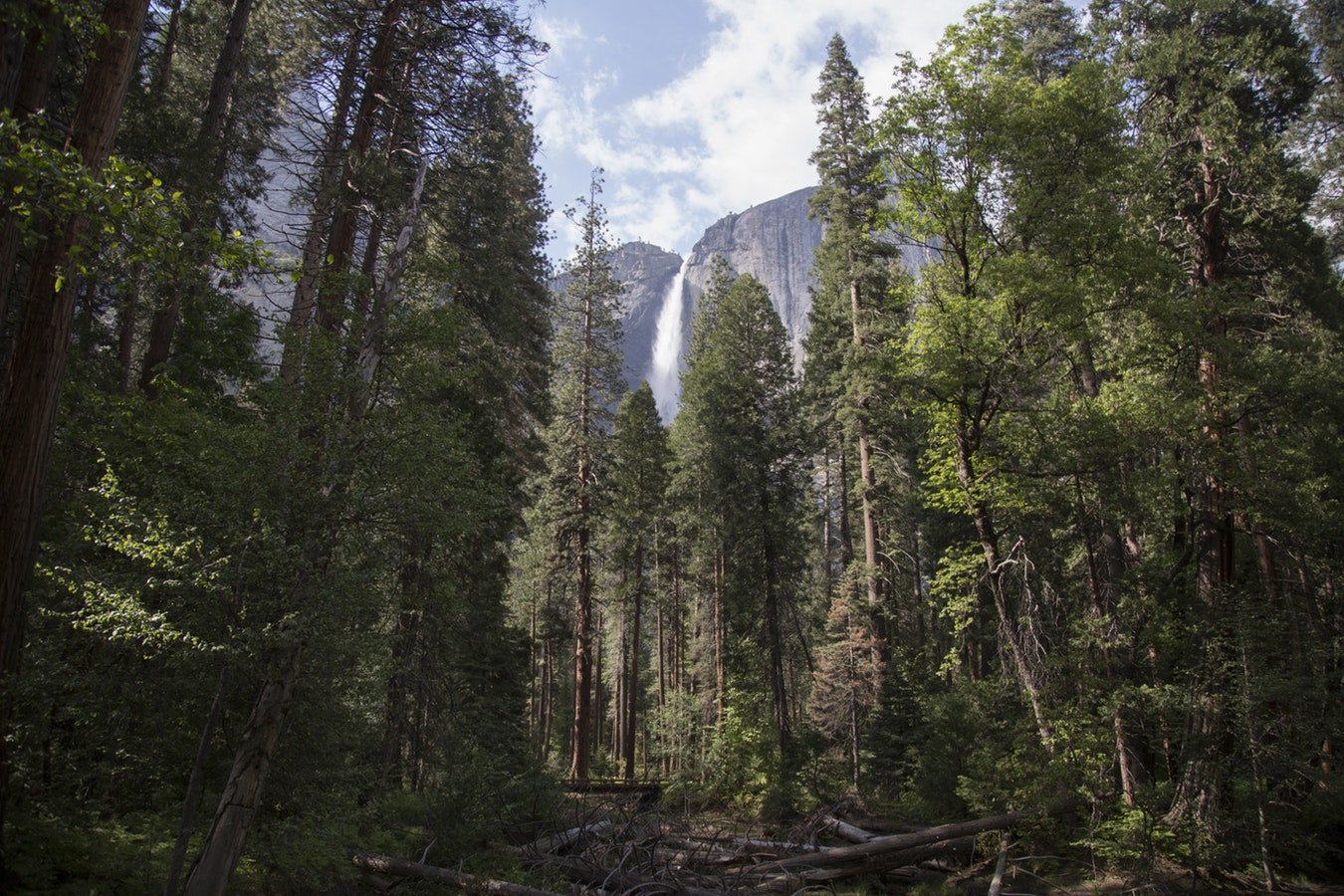
I have been going about the valley all morning day, anxious to learn what I could of this magnificent power. The ground is still in motion. It has never fairy settled since the first shock. Between each of the greater shocks a heavy rumbling is heard, not always dis- tinguishable from the explosive notes of the Upper Fall. These are the first spoken words that I have heard direct from the tender bosom of Mother Earth. Frogs cease their songs when a severe shock occurs. I noticed a pair of robins flying with a frightened cheep cheep from a shaken oak. Butterflies seem to know nothing about it. Vertical animals are mostly in sore consternation. Two or three have fled. A little girl of Hutchings cried terror stricken in the night, Grandma Grandma Pray to God to stop it. I met? two violets up by Indian Canon I asked them while I looked in their eyes, what they thought of the great quake storm. They replied It’s all Love . We have lost Eagle Rock but have gained another that is more beautiful, Distruction is always creation; storms of water cloud, Storms of azure wind, purple granite, are things of Beauty Love, working Beauty Love constantly higher yet higher – I did not purpose sending so much storm. I write mostly to repeat my invitation to Yosemite next summer. for this year Pacific letters fly Atlanticward like wounded birds, All are unsteady many fall dead in drifts.
Our thoughts and love are with our friends, family and all the people of California.
 Dean’s List