Margaret Fuller
Nature makes children happier, science shows

As my wife, daughters and I hiked through the woods at one of the many state parks near our home, I explained to them how we were doing three things that were simultaneously boosting our happiness at that moment. . . (CNN)
The Smithsonian has released more than 2.8 million images you can use for free

Included are images from all 19 Smithsonian museums, nine research centers, libraries, archives, and the National Zoo. (The Verge)
Radical Transcendentalism: Emerson, Muir and the Experience of Nature
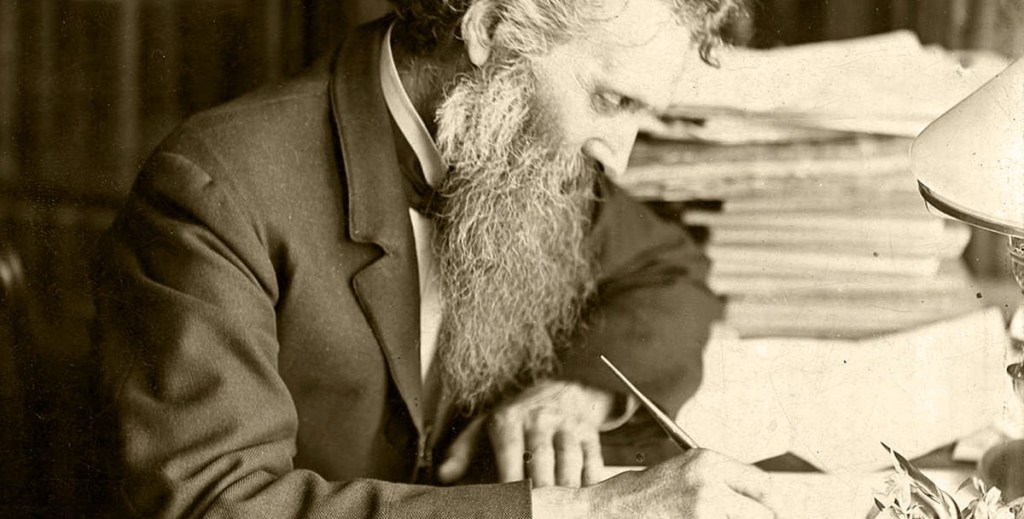
The uniquely American Transcendentalist School which formed in Harvard-influenced 1830’s Cambridge brought a New Idea regarding man, spirit, and nature to a young country struggling to find its own voice . . . (Sierra Club)
Walt Whitman and the Soul of Democracy

Whitman looks across America and sees himself in whomever he meets: “the horseman in his saddle,/Girls, mothers, house-keepers, in all their performances,/The group of laborers seated at noon-time with their open dinner-kettles, and their wives waiting,/The female soothing a child–the farmer’s daughter in the garden or cow-yard,/The young fellow hoeing corn.” (The Atlantic)
A Photographer’s Guide To ‘Slow Seeing’ The Beauty In Everyday Nature

Janelle Lynch invites you to look closer, and slower. She’d want you to see each image as a world in itself — not an accidental grouping of plant matter, but a well-ordered composition created by nature and fixed in time and space by her 8-by-10-inch large-format camera.
Her implicit message is that one needs only to be still, take your time and pay close attention to find the beauty that surrounds you. But, like meditation, this seemingly simple act is often more difficult than it appears.
(NPR)
Contemplative Pedagogy Collaboration
Contemplative Pedagogy in the 21st Century University
How America Became “A City Upon a Hill”

Perry Miller, a midcentury Harvard scholar of history and literature, was a giant of academe. From 1931 to 1963, as the scholar Michael Clark has summarized, Miller “presided over most literary and historical research into the early forms of American culture.” He helped establish the study of what he called “American Civilization,” contributing to the rise of a new discipline, American Studies.
National Endowment For The Humanities
 Dean’s List