Inside the Far-Out World of Dream Therapy

(Medium) 

Dream interpretation often gets lumped into the same kind of pop mysticism as tarot cards and astrology, deemed a useless attempt to assign meaning to what is widely believed to be nothing more than the random firing of neurons in the brain. . .

Tarot and Astrology are forms of “divination” not “mysticism.”

“As soon as we start paying attention to our dreams, we begin to understand that there is an intelligence there,” says Rubin Naiman, PhD, a psychologist and sleep and dream expert with the the University of Arizona’s Center for Integrative Medicine. “There’s a wisdom. There’s a compassion. There’s depth, and it can open our hearts to seeing life in a whole different way.”

Naiman is one of a burgeoning group of psychologists around the world modernizing the work of Carl Jung and Sigmund Freud by incorporating dream therapy into his practice. But Naiman is more than just a dream therapist — he’s a dream crusader on a mission to fix the “epidemic of dream loss” he believes we’ve found ourselves in that has left us, well, psychically constipated.

“Dreaming digests. It metaphorically chews on, swallows, assimilates, filters through, and it decides what it’s going to excrete,” Naiman says. “We’re nourished by daily experiences, and if we’re no longer digesting new experiences, we become psychologically malnourished. People who don’t dream well are not receiving nourishment on a daily basis from new experiences.”

​Blue Mind science proves the health benefits of being by water

IMG_7649.jpg
(Quartz)

“People can experience the benefits of the water whether they’re near the ocean, a lake, river, swimming pool or even listening to the soothing sound of a fountain,” marine biologist and author of the 2014 book Blue Mind, Wallace Nichols, tells Quartz. ”Most communities are built near bodies of water not just for practical reasons, but because as humans, we’re naturally drawn to blue space…but even if you aren’t in an area where there is easy access to water, you can still experience [its] emotional benefits.”

Maybe Your Sleep Problem Isn’t a Problem

(NYTimes​)

The conventional wisdom is that morning people are high achievers, go-getters, while late risers are lazy. But what if going to bed in the wee hours is actually an advantage?

COME ON LUCKY SEVEN!!!!!

According to Dr. Walker, about 40 percent of the population are morning people, 30 percent are evening people, and the remainder land somewhere in between. “Night owls are not owls by choice,” he writes. “They are bound to a delayed schedule by unavoidable DNA hard wiring. It is not their conscious fault, but rather their genetic fate.”

Tell me more …

And I have it fairly bad. My body naturally wants to go to bed around 2 a.m. and rise around 10 a.m. Whenever I try to adjust to an early schedule, my brain is like mush. Conversely, I light up like the Rockefeller Center Christmas tree around 9 p.m., and for the next few hours I am my most me: alert, clever, inspired to create.

Me too, but writing peaks about 11.

“Here’s to all 180 million of you late risers, night crawlers and can’t-get-to-sleepers,” the voice-over says, as Eric Clapton’s “After Midnight” swells in the background. “Because the ones who truly change the world are the ones who are still at it when everyone else is fast asleep.”

I like how this ends.

‘Risky’ Playgrounds Are Making a Comeback

(CityLab)

800px-Jack_and_Elise_jumping_off_swings.jpg

“The take-home message for municipalities is: Stop setting your bar at the level of the most anxious parent. If you do that, you’re guaranteed to produce boring and dull playgrounds,” said Tim Gill, a London-based researcher and advocate who recently authored a white paper on faulty assumptions about risky playgrounds. “If you set your bar at the level of the average parent or maybe even at the level of the parents … who do want some more excitement and challenge in their kids’ lives, then, things start to look different.”

Go Outside And​ Play!

Communing with the Forest Bathers

(Outside)

IMG_7623.jpg

The 30th gathering of the San Francisco–based Forest Bathing Club occurred on a Sunday afternoon in the Presidio, the city’s gorgeous 1,500-acre military post turned national park. The group first convened in 2015 and has lately ramped up to four or five events each month.

I try to saunter in nature every day.

The Obliteration of Night: On the Consequences of Electric Light

d3817cf072c1ef04c0c7c735d83f078f.jpg
(Undark.org)

I expressed the first serious concern about the potential health consequences of electric light at night 30 years ago, when I asked whether over-lighting might increase the risk of breast cancer. It was during the 1980s, just as researchers were finding that a fatty Western diet might not much alter the breast-cancer risk in individuals, that a friend from the Fred Hutchinson Cancer Research Center in Seattle pointed me to research on the impact of melatonin. Lowered levels of melatonin (an effect of over-lighting) had been traced to heightened levels of oestrogen (at least in rodents), a clear breast-cancer risk factor when fatty diets were not. Later evidence has shown that women who work the night shift are at higher breast-cancer risk. Evidence suggests that circadian disruption from over-lighting the night could be related to risk of obesity and depression as well. In fact, it might be that virtually all aspects of health and wellbeing are dependent to one extent or another on a synchronized circadian rhythmicity, with a natural cycle of bright days and dark nights.

This makes me very​ happy about preference​ for a firelight level of light at night.

Putting a finer point on the risk is ‘The New World Atlas of Artificial Night Sky Brightness’, published in 2016. The atlas uses data from NASA’s Suomi National Polar-orbiting Partnership satellite to estimate skyglow across the globe. The images in the atlas are either dazzling or horrifying, depending on how you look at it. In its colored maps of cities and countries, using brighter colors to show greater skyglow, Europe and North America appear ablaze. According to the atlas, the Milky Way cannot be seen at night by one-third of humans. In Europe, it’s not visible to 60 percent of people, and in North America, it’s a whopping 80 percent.

That would be me.

Treating Teens’ Depression May Be Great for Parents’ Mental Health, Too

“Relationships are reciprocal,” says Laura Mufson, the associate director of the Division of Child & Adolescent Psychiatry at Columbia University, who was not involved in the study. “If one child isn’t doing well, if they’re having mood problems, if they’re more irritable—it’s affecting their behavior that impacts the rest of people in the family.”

It’s as if everything is interconnected?
Also, try time in the woods together.

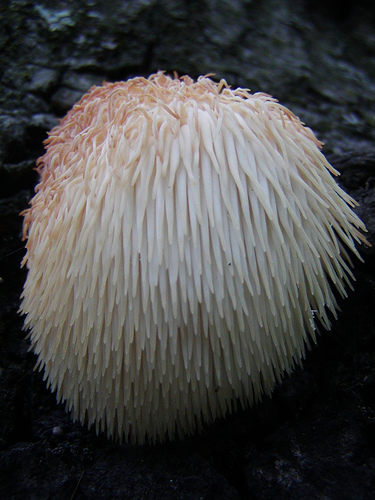
24 Benefits of Lion’s Mane Mushroom (Hericium Erinaceus)

lionsmane

(Selfhacked)
Lion’s mane is an edible mushroom with many health benefits. It is a nootropic superfood that can modulate the immune system and provide many other health benefits. In this post, you will find 24 proven and potential benefits of Lion’s Mane, and all the different ways in which this mushroom can improve your wellbeing.