Category: Thoreau-Back Thursday
Margaret Fuller
Radical Transcendentalism: Emerson, Muir and the Experience of Nature
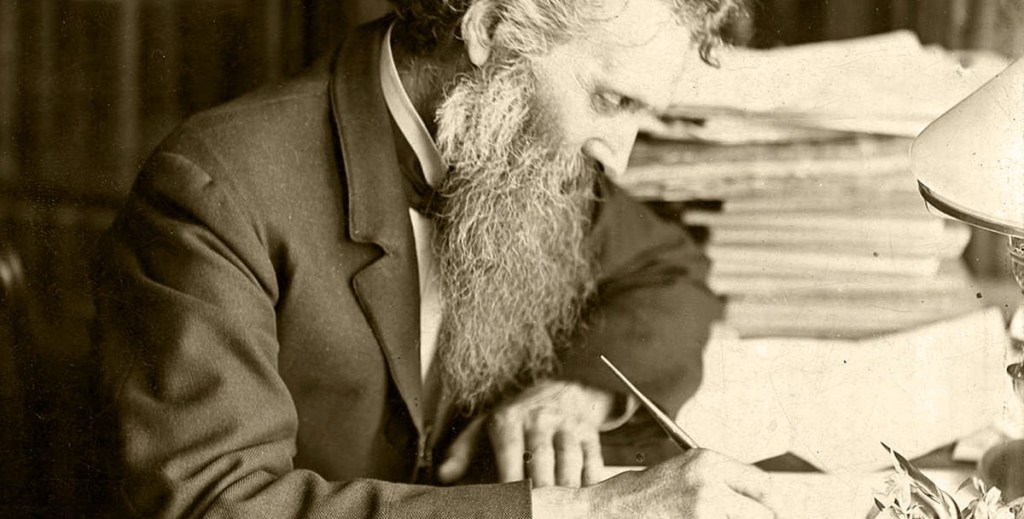
The uniquely American Transcendentalist School which formed in Harvard-influenced 1830’s Cambridge brought a New Idea regarding man, spirit, and nature to a young country struggling to find its own voice . . . (Sierra Club)
Walt Whitman and the Soul of Democracy

Whitman looks across America and sees himself in whomever he meets: “the horseman in his saddle,/Girls, mothers, house-keepers, in all their performances,/The group of laborers seated at noon-time with their open dinner-kettles, and their wives waiting,/The female soothing a child–the farmer’s daughter in the garden or cow-yard,/The young fellow hoeing corn.” (The Atlantic)
The Natural Historian . . .
The natural historian is not a fisherman who prays for cloudy days and good luck merely; but as fishing has been styled “a contemplative man’s recreation,” introducing him profitably to woods and water, so the fruit of the naturalist’s observations is not in new genera or species, but in new contemplations still, and science is only a more contemplative man’s recreation.
Henry David Thoreau, A Week on the Concord and Merrimack Rivers
Walt Whitman on Grannie Flats
The Myth of Self-Reliance

I was far from immune to this essay. I underlined “the great man is he who in the midst of the crowd keeps with perfect sweetness the independence of solitude.” But the more I looked back on it, the more I began to wrestle with the essay’s blind spot. I didn’t immediately see it, because the blind spot was also my own.
Jenny Odell shares some thoughts on Emerson’s Self Reliance in The Paris Review
Never was there, perhaps, more hollowness at heart than at present . . .

We had best look our times and lands searchingly in the face, like a physician diagnosing some deep disease. Never was there, perhaps, more hollowness at heart than at present, and here in the United States. Genuine belief seems to have left us. The underlying principles of the States are not honestly believ’d in, (for all this hectic glow, and these melodramatic screamings,) nor is humanity itself believ’d in. Democratic Vistas, 1871
Democratic Vistas. – Archive.org
Commentary — The Walt Whitman Archive
What Whitman Knew — The Atlantic
For You O Democracy

Come, I will make the continent indissoluble,
I will make the most splendid race the sun ever shone upon,
I will make divine magnetic lands,
With the love of comrades,
With the life-long love of comrades.
I will plant companionship thick as trees along all the rivers of America, and along the shores of the great lakes, and all over the prairies,
I will make inseparable cities with their arms about each other’s necks,
By the love of comrades,
By the manly love of comrades.
For you these from me, O Democracy, to serve you ma femme!
For you, for you I am trilling these songs.
Walt Whitman, 1892
Emerson, April 8, 1854
You must finish a term & finish every day, & be done with it.
For manners, & for wise living, it is a vice to remember.
You have done what you could — some blunders & absurdities
no doubt crept in forget them as fast as you can tomorrow is a new day.
You shall begin it well & serenely, & with too high a spirit to be cumbered
with your old nonsense. This day for all that is good & fair. It is too dear
with its hopes & invitations to waste a moment on the rotten yesterdays.
Emerson — April 8, 1854
 Dean’s List