You cannot live on vegetable food solely

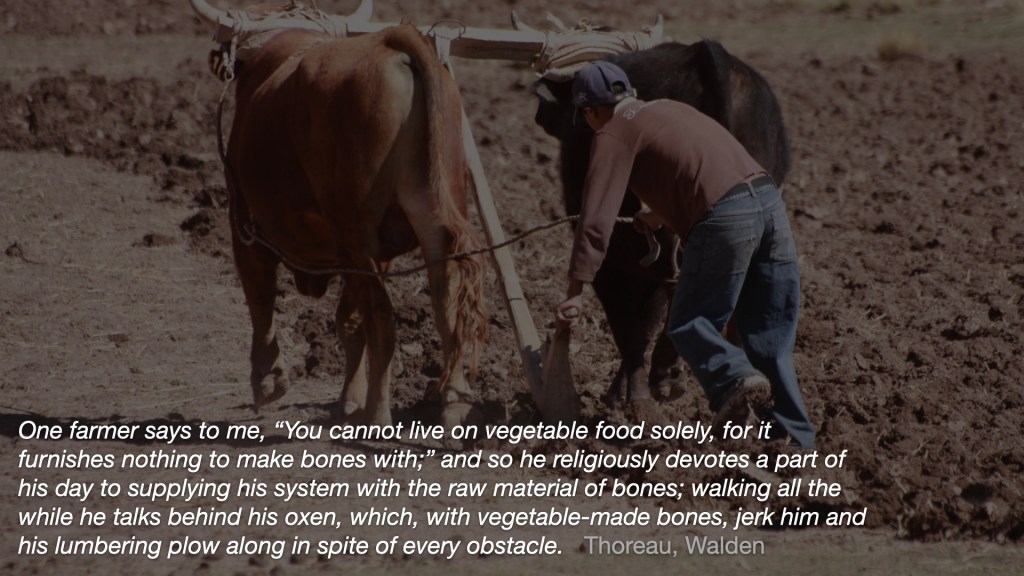
One farmer says to me, “You cannot live on vegetable food solely, for it furnishes nothing to make bones with;” and so he religiously devotes a part of his day to supplying his system with the raw material of bones; walking all the while he talks behind his oxen, which, with vegetable-made bones, jerk him and his lumbering plow along in spite of every obstacle.   Thoreau, Walden
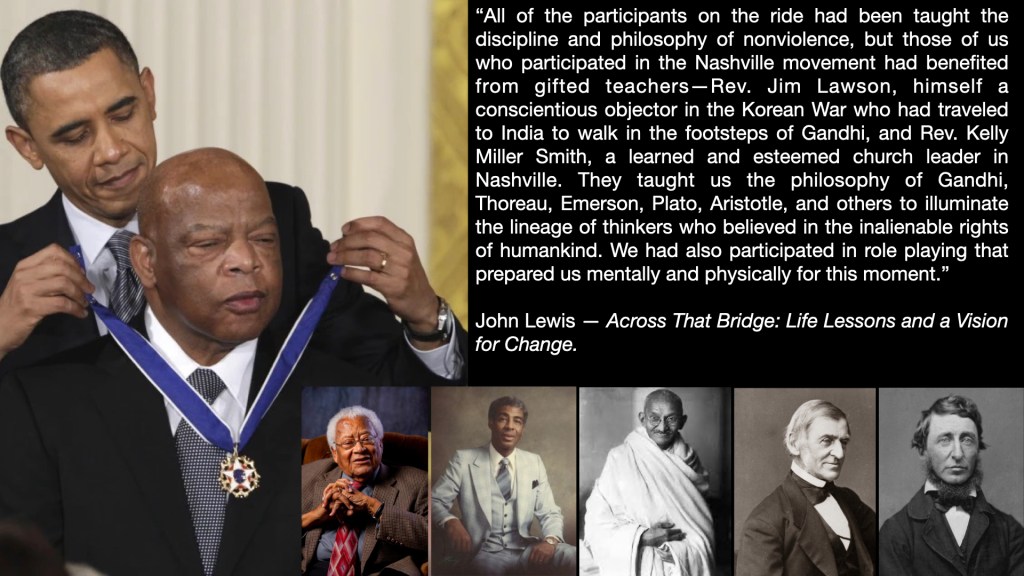
Emerson, Thoreau, Gandhi, Lewis

“All of the participants on the ride had been taught the discipline and philosophy of nonviolence, but those of us who participated in the Nashville movement had benefited from gifted teachers—Rev. Jim Lawson, himself a conscientious objector in the Korean War who had traveled to India to walk in the footsteps of Gandhi, and Rev. Kelly Miller Smith, a learned and esteemed church leader in Nashville. They taught us the philosophy of Gandhi, Thoreau, Emerson, Plato, Aristotle, and others to illuminate the lineage of thinkers who believed in the inalienable rights of humankind. We had also participated in role playing that prepared us mentally and physically for this moment.”

John Lewis — Across That Bridge: Life Lessons and a Vision for Change.

Thomas Merton On Thoreau

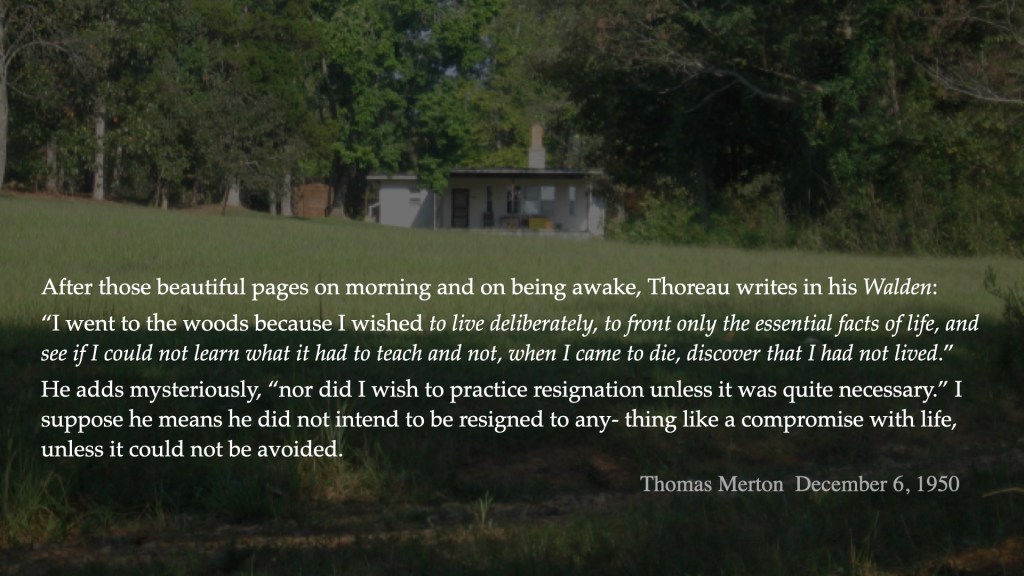
After those beautiful pages on morning and on being awake, Thoreau writes in his Walden:

“I went to the woods because I wished to live deliberately, to front only the es- sential facts of life, and see if I could not learn what it had to teach and not, when I came to die, discover that I had not lived.”

He adds mysteriously, “nor did I wish to practice resignation unless it was quite necessary.” I suppose he means he did not intend to be resigned to any- thing like a compromise with life, unless it could not be avoided.

Thomas Merton December 6, 1950

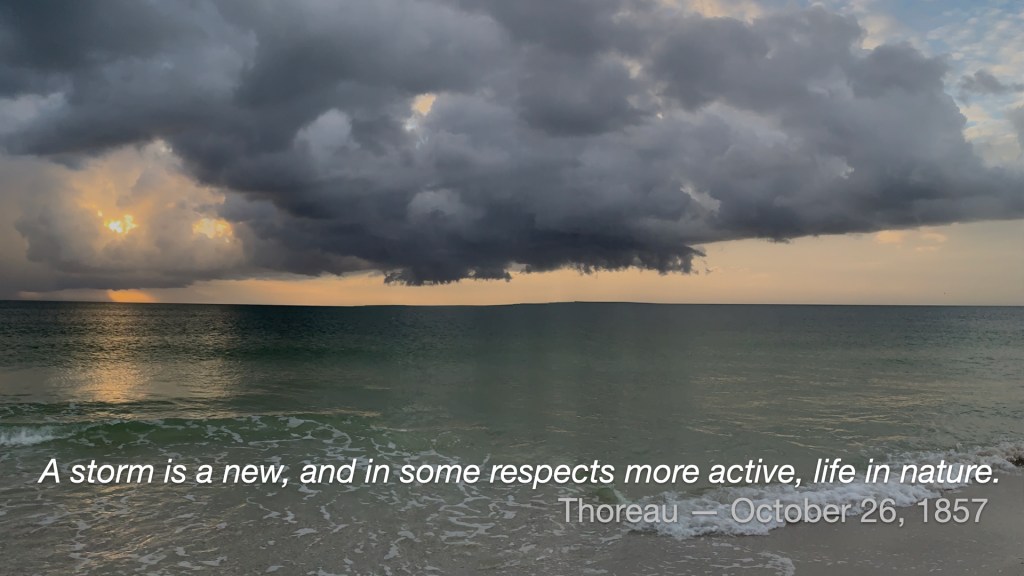
Thoreau May 27, 1841

I sit in my boat on Walden playing the flute this evening and see the perch, which I seem to have charmed, hovering
around me, and the moon traveling over the ribbed bottom,
and feel that nothing but the wildest imagination can conceive of the manner of life we are living. Nature is a wizard. The Concord nights are stranger than the Arabian night. — Thoreau May 27, 1841

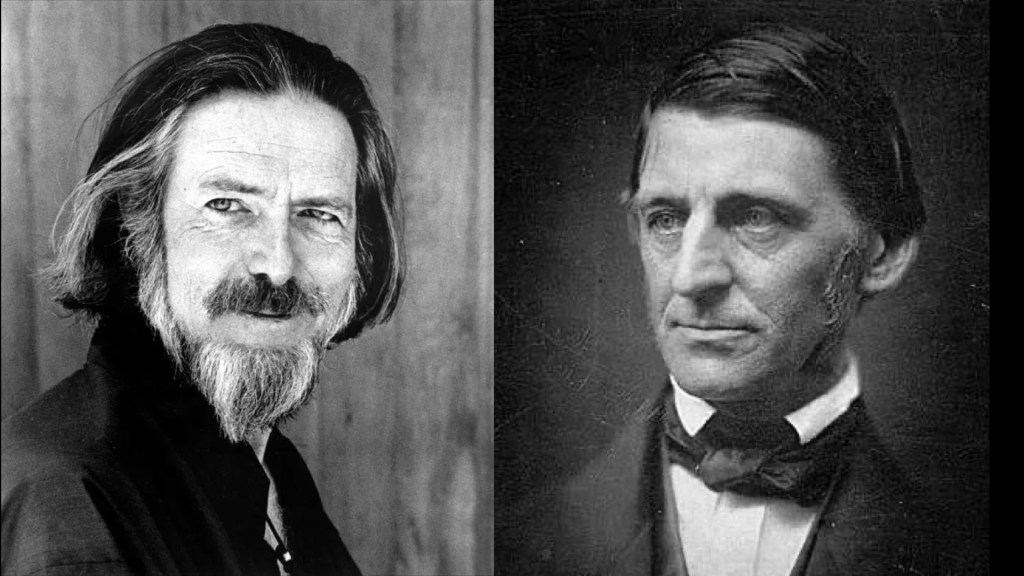
Watts and Emerson

“It is thus that almost every morning, when I first awaken,I have a feeling of total clarity as to the sense of life,
a feeling of myself and the universe as a matter of the utmost simplicity.“I” and “That which is” are the same. Always have been and always will be. I could say that what constitutes me is the same jazz that constitutes the cosmos,
and that there is simply nothing special to be achieved, realized, or performed. And so also Emerson, in his essay on “Self- Reliance”:” 

These roses under my window make no reference to former roses or to better ones; they are for what they are; they exist with God today. There is no time for them. There is simply the rose; it is per­fect in every moment of its existence —- But man postpones or re­members; he does not live in the present, but with reverted eye laments the past, or, heedless of the riches that surround him, stands on tiptoe to foresee the future. He cannot be happy and strong until he too lives with nature in the present, above time.”

Alan Watts, In My Own Way. p250