
Just over 20 years old, this field has captivated the world with its hopeful promises — and drawn critics for its moralizing, mysticism, and serious commercialization. (Vox)
Just over 20 years old, this field has captivated the world with its hopeful promises — and drawn critics for its moralizing, mysticism, and serious commercialization. (Vox)
Beck is one of the leading advocates for adaptive climbing in the United States. She believes we have not yet seen how far adaptive climbers can take the sport. “I don’t know what the real limit is,” she says.
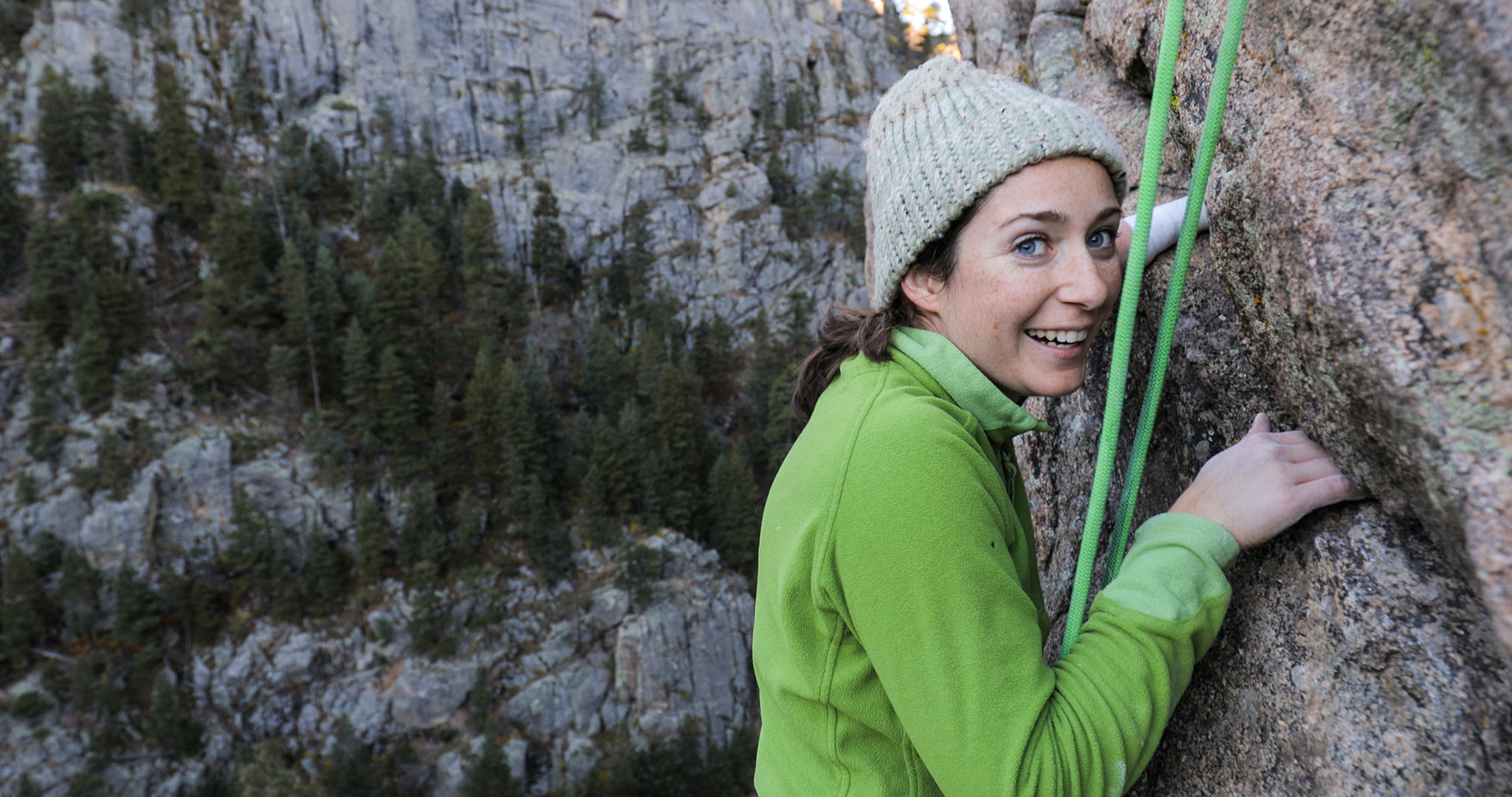
I bow to you Maureen Beck! “Adaptive climbing; Shmadaptive climbing.” You “out climb” me in every way. I get nervous climbing too high in trees. I’m OK with that. Sending you an awesome sized big hug. Yes, a hug that would elicit both wonder and terror–not unlike climbing a sheer thousand-foot cliff. I hope you find no limits!

(The Cut)
I have loved olives for as long as I can remember — thanks, mom. I have had most every variety at some point or another. Also, if you stuff a soft cheese into an olive invite me over. But it was not until five or six years ago that I had sauteed olives at a little wine bar in the Sea-Tac Airport. As this article suggests, I too discovered I had never really eaten olives optimally until that moment.
“That’s why I think Sweetgreen is taking off,” she said. “People don’t want to feel heavy because they want to feel productive.”
The trash cans, however, are getting very heavy indeed. Robert Buffolino, the general manager of American Recycling Management in Jamaica, Queens, said that it would be difficult to evaluate systematically whether the number of salad bowls in garbage cans had actually increased.
But if you were asking him anecdotally? “Yeah, sure, there’s been an increase. Just by sight and sound, sure.”
Moreover, “most waste occurs at the consumer level,” said Marc Bellemare, who directs the Center for International Food and Agricultural Policy at the University of Minnesota. “Restaurants and grocery stores don’t waste as much as consumers do.” He added, “most of what gets wasted is not frozen pizza, it’s not ice cream, it’s produce, it’s stuff that goes in salad. I suspect that the rise of those restaurants, my intuition is that those will mean the rise of food waste as well, because they sell this stuff to consumers, where the bulk of the losses tend to occur.”
It’s not just the food, it’s the food system.
A new book entitled The Happiness Fantasy by Carl Cederström, a business professor at Stockholm University, traces our current conception of happiness to its roots in modern psychiatry and the so-called Beat generation of the ‘50s and ‘60s. He argues that the values of the countercultural movement — liberation, freedom, and authenticity — were co-opted by corporations and advertisers, who used them to perpetuate a culture of consumption and production. And that hyper-individualistic culture actually makes us much less happy than we could be.
This has long been an apt criticism of the Human Potential Movement. But I would add it was not the intent of its founders who were interested in social reform.
(New York Times)
BIG SUR, Calif. — Silicon Valley, facing a crisis of the soul, has found a retreat center.
It has been a hard year for the tech industry. Prominent figures like Sean Parker and Justin Rosenstein, horrified by what technology has become, have begun to publicly denounce companies like Facebook that made them rich.
And so Silicon Valley has come to the Esalen Institute, a storied hippie hotel here on the Pacific coast south of Carmel, Calif. After storm damage in the spring and a skeleton crew in the summer, the institute was fully reopened in October with a new director and a new mission: It will be a home for technologists to reckon with what they have built.
(MarketWatch)
There are some things that money can’t buy. True friends and happiness are among them. In fact, an 80-year-long study at Harvard University claims good pals are the key to a happy life.Scientists began tracking the health of 268 Harvard sophomores in 1938, and have continued the study over the past eight decades. The original participants included President John F. Kennedy and longtime Washington Post editor Ben Bradlee, according to the Harvard Gazette. The study originally only included men, as Harvard didn’t admit women at that time, but the ongoing research has expanded, and now includes 1,300 of the original participants’ offspring. In the 1970s, 456 Boston inner-city residents were added to the study.
“The surprising finding is that our relationships and how happy we are in our relationships has a powerful influence on our health,” Robert Waldinger, director of the study and a professor of psychiatry at Harvard Medical School, told the Harvard Gazette. “Taking care of your body is important, but tending to your relationships is a form of self-care too. That, I think, is the revelation.” That, he said, is more important than money or fame. “Loneliness kills,” he added. “It’s as powerful as smoking or alcoholism.”
Slate
Researchers found that the higher the humanities exposure, the higher these students scored on measures of empathy, wisdom, tolerance of ambiguity, resourcefulness, and emotional intelligence, and the lower they scored in signs of burnout.
From personal experience, the people most in need of greater “empathy, wisdom, tolerance of ambiguity, resourcefulness, and emotional intelligence” are the last to ever think they are deficient in any way. Additionally, they are also usually void of any interest in any aspect of the humanities.

 Dean’s List