Category: Ecology
How Beauty Is Making Scientists Rethink Evolution

Now, nearly 150 years later, a new generation of biologists is reviving Darwin’s neglected brainchild. Beauty, they say, does not have to be a proxy for health or advantageous genes. Sometimes beauty is the glorious but meaningless flowering of arbitrary preference. Animals simply find certain features — a blush of red, a feathered flourish — to be appealing. And that innate sense of beauty itself can become an engine of evolution, pushing animals toward aesthetic extremes. In other cases, certain environmental or physiological constraints steer an animal toward an aesthetic preference that has nothing to do with survival whatsoever.
New York Times
Arborists Have Cloned Ancient Redwoods From Their Massive Stumps
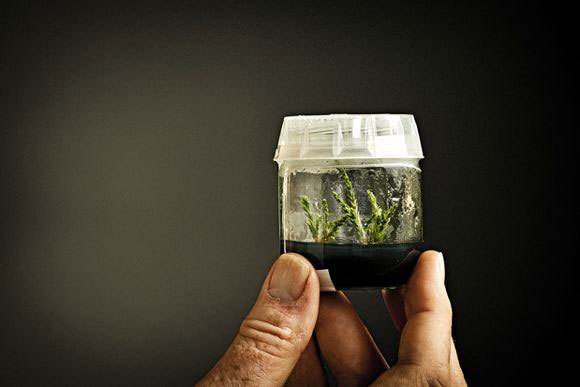
A team of arborists has successfully cloned and grown saplings from the stumps of some of the world’s oldest and largest coast redwoods, some of which were 3,000 years old and measured 35 feet in diameter when they were cut down in the 19thand 20th centuries. Earlier this month, 75 of the cloned saplings were planted at the Presidio national park in San Francisco.
The initiative is run by the Archangel Ancient Tree Archive, a nonprofit working to reestablish ancient redwood forests to help combat climate change. Coastal redwoods, which can grow an average 10 feet per year, sequester 250 tons of carbon dioxide from the atmosphere over their lives, compared to 1 ton for an average tree.
What Is This Green New Deal Anyway?

So, what specifically is in Ocasio-Cortez’s Green New Deal?
The Sierra Club has some answers.
Mushroom Surfboards
I want one
Photosynthesis Makes a Sound
Teasing sounds apart in an underwater habitat is like trying to listen for the crackle of a single street light in the middle of Times Square. So when scientists thought they heard the sound of algae on a coral reef, their hunch was met with some skepticism. How could something seemingly so sedentary ring out over some of the ocean’s chattiest (and most flatulent) inhabitants, sloshing waves, and noisy humans? With bubbles, it turns out.
(Hakai)
Like the plants that help us breathe, algae also photosynthesize. Underwater, that process of converting sunlight and carbon dioxide into energy and oxygen sends tiny bubbles spiraling toward the surface. And according to new research, when each bubble detaches from the seaweed, it goes ping. The scientists behind the discovery suggest that, like a heartbeat heard through a stethoscope, measuring that unique sound could be a new way to monitor the health of a coral reef.
City Parks May Mend the Mind

(Scientific America)
Exposure to natural settings has been linked with a vast array of human health benefits, from reduced rates of depression to increased immune functioning. Two recent studies found evidence suggesting that urban green spaces, such as parks and gardens, may also improve cognitive development and buffer against the effects of health inequality.
The Secret Language of Trees

(To The Best Of Our Knowledge)
This is the ‘last generation’ that can save nature, WWF says

The proportion of the planet’s land that is free from human impact is projected to drop from a quarter to a tenth by 2050, as habitat removal, hunting, pollution, disease and climate change continue to spread, the organization added.The group has called for an international treaty, modeled on the Paris climate agreement, to be drafted to protect wildlife and reverse human impacts on nature.It warned that current efforts to protect the natural world are not keeping up with the speed of manmade destruction.The crisis is “unprecedented in its speed, in its scale and because it is single-handed,” said Marco Lambertini, the WWF’s director general. “It’s mindblowing. … We’re talking about 40 years. It’s not even a blink of an eye compared to the history of life on Earth.”“Now that we have the power to control and even damage nature, we continue to (use) it as if we were the hunters and gatherers of 20,000 years ago, with the technology of the 21st century,” he added. “We’re still taking nature for granted, and it has to stop.”
Plastics have entered the human food chain.

PARIS: Bits of plastic have been detected in the faeces of people in Europe, Russia and Japan, according to research claiming to show for the first time the widespread presence of plastics in the human food chain.
All eight volunteers in a small pilot study were found to have passed several types of plastic, with an average of 20 micro-particles per 10g of stool, researchers reported Tuesday at a gastroenterology congress in Vienna.
The scientists speculated that the tiny specks – ranging in size from 50 to 500 micrometres – may been ingested via seafood, food wrapping, dust or plastic bottles.
Read more at https://www.channelnewsasia.com/news/world/plastics-enter-human-food-chain-study-microplastics-10856832
 Dean’s List